Metro-Goldwyn-Mayer
It’s a pretty big week across almost all decades as studios are putting out all of their big guns to take advantage of Christmas vacations in the US, as well as Academy Awards consideration. Pre-Oscars, 1925 includes two major silent films. 1935 saw a major actress win her first Oscar, another suffered one of the biggest flops of her career, and two relative uknowns became movie stars. A 1945 film nearly killed one of its stars, but the lead actress was Oscar-nominated. A 1945 film was honored by the Oscars and the Golden Globes. 1975 saw two films released on the same day with the same lead actor, one of which being a notorious box office flop, while another dramatic film used a real incident for its inspiration, and included actual footage from the historical event. A 1985 film flopped so badly its lead actor took a four year vacation from films. A 1995 film ended with its four directors barely speaking, while another became a sci-fi cult classic with an unknown actor who was an A-lister by the time it was released. 2005 gave us a musical adaptation of a Broadway musical which was an adaptation of a comedy movie, and 2015 brought the Western back to the big screen, and saw one film earn some records with its Osacr wins. Scroll down to see all of the films released this week, and tell us if any of your favorites are celebrating milestone anniversaries.
1925
- December 25 – My Lady of Whims (USAM Dallas M. Fitzgerald Productions)
- December 26 – Lady Windermere’s Fan (USA, Warner Bros. Pictures)
- December 27 – Bluebeard’s Seven Wives (USA, First National Pictures)
- December 27 – Braveheart (USA, Cinema Corporation of America)
- December 27 – Infatuation (USA, Corinne Griffith Productions)
- December 27 – North Star (USA, Howard Estabrook Productions)
- December 27 – Sally, Irene and Mary (USA, Metro-Goldwyn-Mayer)
- December 27 – The Ancient Mariner (USA, Fox Film Corporation)
- December 27 – The Golden Strain (USA, Fox Film Corporation)
- December 27 – The Goose Woman (USA, Universal Jewel)
- December 27 – The Great Love (USA, Metro-Goldwyn-Mayer)
- December 27 – Tumbleweeds (USA, William S. Hart Productions)
- December 28 – A Woman of the World (USA, Famous Players-Lasky Corporation)
- December 28 – Cactus Trails (Harry Webb Productions)
- December 28 – Womanhandled (USA, Famous Players-Lasky Corporation)
- December 30 – Ben-Hur: A Tale of the Christ (USA, Metro-Goldwyn-Mayer)
- December 30 – Lover’s Island (USA, Encore Pictures)
- December 31 – Venetian Lovers (UK, Münchner Lichtspielkunst AG-British Screen Classics)
Venetian Lovers first opened in Germany on September 11, 1925, but has no known US theatrical release date.
The survival statues for Infatuation, The Goose Woman, A Woman of the World, Lover’s Island and Venetian Lovers are unknown, while Bluebeard’s Seven Wives, The Ancient Mariner, The Great Love and Cactus Trails are considered lost.
My Lady of Whims originally consisted of seven reels, but only five survive. Star Clara Bow was 20 years old when she made the film. The ending scene from the film was used in the music video for Queen and David Bowie’s song ‘Under Pressure’. Lady Windermere’s Fan survives in multiple archives. The film was transferred to 16mm in the 1950s for television broadcast. It was selected for preservation in the National Film Registry in 2002.
Braveheart is a remake of 1914’s Strongheart. Both versions are based on Strongheart, the first play from Cecil B. DeMille’s brother William C. DeMille. The film was directed by Alan Hale Sr., father of Alan Hale Jr., who would be best known as the Skipper on Gilligan’s Island. The film was retitled Braveheart because there was already a dog star by the name of Strongheart. Braveheart was restored by the Washington Film Preservation Project and shown at the Yakama Nation Native American Film Festival in 2006 and 2007.
Speaking of Strongheart, North Star was a starring vehicle for the canine, who was a rival of Rin Tin Tin. Future star Clark Gable appears in a supporting role.
Erté designed the stage show costumes and sets for Sally, Irene and Mary. A print of the film was was preserved by MGM and transferred to the George Eastman Museum Motion Picture Collection. A restoration funded under a grant from the Louis B. Mayer Foundation was completed in 2019.
The Ancient Mariner was based upon the poem The Rime of the Ancient Mariner, and many scenes in the film were based upon the drawings made for the poem by illustrator Gustave Doré. A complete print of The Golden Strain is in the collection of the Museum of Modern Art. Tumbleweeds was the last movies of William S. Hart. The film survives and has been released on home video. A print of Womanhandled is held at the Library of Congress.
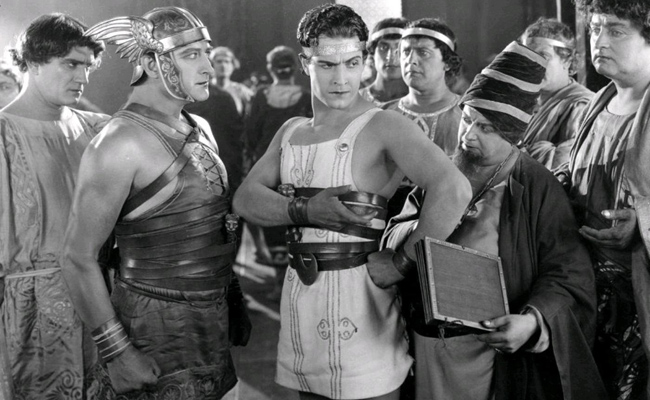
During the chariot race scene in Ben-Hur: A Tale of the Christ, the crowd featured a number of notable extras including John and Lionel Barrymore, Joan Crawford, Douglas Fairbanks, Dorothy and Lillian Gish, Samuel Goldwyn, Sid Grauman, Harold Lloyd, Carole Lombard, Myrna Loy and Mary Pickford. The film was based on the stage play which had run for 25 years. George Walsh was originally cast in the title role, but was fired while on location in Italy and replaced with Ramon Novarro. Other re-casting and changes in crew, including the director, caused the budget to skyrocket. Erté, then known as Romain de Tirtoff, designed costumes and sets for the film. It was the most expensive film of the silent era at $3.9 million ($68.3 million today). 200,000 feet of film was used for the chariot race sequence, which was cut down to 750 feet for the release print. The race’s opening sequence was re-created shot-for-shot in the 1959 remake, copied in the 1998 animated film The Prince of Egypt, and imitated in the pod race scene in the 1999 film Star Wars: Episode I – The Phantom Menace. Some of the scenes in the 1925 film were shot in two-color Technicolor, most notably the sequences involving Jesus. A young William Wyler was an assistant director on this sequence. Wyler would go on to direct the 1959 remake. The Technicolor sequences had been thought lost until the 1980s when Turner Entertainment found the footage in the Czechoslovak Film Archive. Current prints of the 1925 version are from the Turner-supervised restoration which includes the color tints and Technicolor sections set to resemble the original theatrical release.
1935
- December 25 – Ah, Wilderness! (USA, Metro-Goldwyn-Mayer)
- December 25 – Dangerous (USA, Warner Bros. Pictures)
- December 25 – Sylvia Scarlett (USA, RKO Radio Pictures)
- December 25 – The Bride Comes Home (USA, Paramount Pictures)
- December 27 – The Littlest Rebel (USA, 20th Century Fox)
- December 27 – A Tale of Two Cities (USA, Metro-Goldwyn-Mayer)
- December 27 – Professional Soldier (USA, 20th Century Fox)
- December 27 – We’re Only Human (USA, RKO Radio Pictures)
- December 28 – Captain Blood (USA, Cosmopolitan Productions)
- December 28 – Hitch Hike Lady (USA, Republic Pictures)
- December 30 – Bulldog Courage (USA, Excelsior Pictures)
- December 30 – Death from a Distance (UK, Invincible Pictures Corp.)
- December 30 – If You Could Only Cook (USA, Columbia Pictures)
- December 30 – Magnificent Obsession (USA, Universal Pictures)
- December 31 – The Lone Wolf Returns (USA, Columbia Pictures)
Death from a Distance first opened in the US on April 30, 1935.
A young Mickey Rooney has a featured role in Ah, Wilderness! Rooney would go on to star in the 1948 musical remake, Summer Holiday.
Dangerous was the first film for which Bette Davis won an Oscar, but she felt it was a consolation prize for not even being nominated the previous year for Of Human Bondage. She felt Katharine Hepburn should have won for Alice Adams. She had originally turned down the film but producer Hal Wallis convinced her that she could make something special of the role. Perc Westmore created the bob cut for Davis in this film which she would have for the rest of her life. The film had six working titles before Wallis settled on Dangerous.
Sylvia Scarlett was notorious as one of the most unsuccessful movies of the 1930s. Hepburn and director George Cukor begged producer Pandro Berman to shelve the film if they agreed to make another one for free. The flop caused Hepburn to be labeled ‘box office poison’. The film marks the first pairing of Katharine Hepburn and Cary Grant.
A slingshot scene was written into The Littlest Rebel due to Shirley Temple’s skill with the instrument. She was perfectly on target and only needed one take for the scene. A Tale of Two Cities was Oscar nominated for Best Picture and Best Film Editing.
Warner Bros. took a gamble on a relatively unknown Errol Flynn for the lead role in Captain Blood, and the film made him a star. The film also established Olivia de Havilland as a major star in her fourth screen appearance. It was also the first of eight times the two would appear together. Robert Donat was the first choice for the lead role, but he feared the actions scenes would be too much for his asthma. During filming, Flynn collapsed during filming after contracting malaria in New Guinea. Some of the film’s sea-battle footage was taken from the silent film The Sea Hawk (1924). Flynn’s son Sean starred in 1962’s The Son of Captain Blood. Erich Wolfgang Korngold’s score for Captain Blood received an Oscar nomination, and set a trend for full-length symphonic scores. The film was nominated for Best Picture, and director Michael Curtiz received the second highest number of write-in votes for Best Director despite not being nominated. The film was also nominated for Sound Recording and Writing.
Death from a Distance was the first feature film broadcast on U.S. commercial television, on July 2, 1941, during the first week of official commercial broadcasts on NBC’s New York television station WNBT-TV.
Magnificent Obsession elevated Robert Taylor to stardom. The film was restored in 2008 and included on a Criterion Collection home video release with the restored 1954 remake. The Lone Wolf Returns, based on the novel of the same name, was previously filmed in 1926.
1945
20th Century Fox
- December 25 – Dakota (USA, Republic Pictures)
- December 25 – Leave Her to Heaven (USA, 20th Century Fox)
- December 27 – Out of the Depths (USA, Columbia Pictures)
- December 28 – Scarlet Street (USA, Fritz Lang Productions-Walter Wanger Productions)
- December 28 – Song of Mexico (USA, Republic Pictures)
- December 28 – The Sailor Takes a Wife (USA, Metro-Goldwyn-Mayer)
- December 29 – San Antonio (USA, Warner Bros. Pictures)
- December 31 – Doll Face (USA, 20th Century Fox)
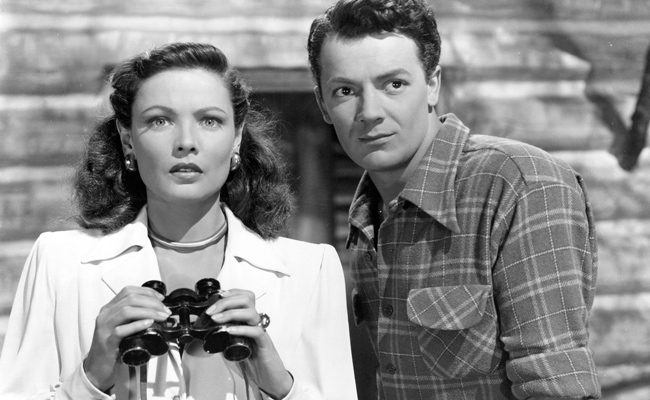
Leave Her to Heaven was 20th Century Fox’s highest grossing film of the decade. The film was selected for preservation in the National Film Registry in 2018. Fox spent an exorbitant $100,000 to acquire the rights to the novel upon which the film is based. Gene Tierney was cast in the lead role based on her performance in Laura. While filming at Bass Lake in Northern California, Darryl Hickman’s stunt double refused to do the swimming scenes because the water was too cold. Hickman did the scenes himself, but at one point developed a cramp and nearly drowned. A crew member jumped off the filming platform and pulled him to safety. The sequences set in Warm Springs, Georgia, were filmed at Busch Gardens in Pasadena, though long shots and process plates were shot on location at the actual Warm Springs Foundation. The film earned four Oscar nominations including Best Actress for Tierney, winning Best Color Cinematography.
The principal actors in Scarlet Street — Edward G. Robinson, Joan Bennett and Dan Duryea — had previously appeared together in The Woman in the Window. Fritz Lang directed both films. Local authorities in New York, Milwaukee, and Atlanta banned Scarlet Street early in 1946 because of its dark plot and themes. Twelve paintings created for the film by John Decker were sent to the Museum of Modern Art in New York City for exhibition in March 1946.
San Antonio director David Butler claimed Warner Bros. built the longest street ever built for a Western but they built it the wrong way. The film was Errol Flynn’s most popular of the 1940s, and Warner Bros’ third most profitable of the year. The film was Oscar-nominated for Best Original Song (‘Some Sunday Morning’) and Best Art Direction.
Doll Face is based on the play The Naked Genius by Gypsy Rose Lee. She is billed under her birth name, Louise Hovick, in the opening credits. She was offered a role in the film but declined. The film is also known as Come Back to Me in the UK. The film’s working titles were The Naked Genius and Here’s a Kiss. The Production Code forbid the studio from using The Naked Genius. The Code administration also objected to the portrayal of the lead character as a stripper. The song ‘True to the Navy’ was submitted for inclusion in the film, and a production number was shot at a cost of $60,000 to $75,000. However, the song had previously been submitted to Paramount, which used it in the 1945 film Bring on the Girls, and refused to license it for use in Doll Face so the number had to be cut. A studio attorney speculated that the refusal was due to 20th Century Fox acquiring distribution rights to Tales of Manhattan and the rights to the title Sentimental Journey, both of which Paramount had wanted.
1955
- December 25 – At Gunpoint (USA, Allied Artists Pictures)
- December 25 – I’ll Cry Tomorrow (USA, Metro-Goldwyn-Mayer)
- December 26 – Storm Over the Nile (UK, London Film Productions)
- December 30 – The Square Jungle (USA, Universal International Pictures)
- December 31 – The Court-Martial of Billy Mitchell (USA, United States Pictures)
Storm Over the Nile was released in the US on June 22, 1956.
I’ll Cry Tomorrow was nominated for four Academy Awards, including Best Actress for Susan Hayward. It won for Best Costume Design – Black-and-White. Hayward was also nominated for a BAFTA, and won Best Actress at the Cannes Film Festival. Co-star Ray Danton won the Golden Globe for Most Promising Newcomer – Male.
Storm Over the Nile is an adaptation of the 1902 novel The Four Feathers. The film reuses footage from the 1939 film Four Feathers, stretching the footage to CinemaScope, and is a shot-for-shot, almost line-for-line remake of that film. Producer Zoltan Korda complained stretching the footage for CinemaScope made the camels look like greyhounds. It was one of the last films from producer Alexander Korda.
Former heavuweight champion Joe Louis appears as himself in The Square Jungle. Elizabeth Montgomery makes her film debut in The Court-Martial of Billy Mitchell. The film received an Oscar nominations for Best Story and Screenplay.
1965
- December 29 – Apache Uprising (USA, A.C. Lyles Productions)
- December 31 – The Night Caller (UK, Armitage Film Productions Ltd.)
Apache Uprising features the last screen appearance by former cowboy star Johnny Mack Brown.
The Night Caller, also known as The Night Caller from Outer Space, was released in the US in November 1966 as Blood Beast from Outer Space. It was the first science fiction film featuring John Saxon. UK prints feature the hit instrumental ‘Image’ playing over the opening credits. Export prints feature the lounge song ‘The Night Caller’, which was written by Albert Hague and performed by Mark Richardson.
1975
- December 25 – Aaron Loves Angela (USA, Aaron Angela Company)
- December 25 – Breakheart Pass (Finland, Gershwin-Kastner Productions)
- December 25 – Friday Foster (USA, American International Pictures)
- December 25 – Hustle (USA, RoBurt Productions)
- December 25 – Lucky Lady (USA, Gruskoff/Venture Films)
- December 25 – Ride a Wild Pony (USA, Walt Disney Productions)
- December 25 – The Black Bird (USA, Rastar Pictures)
- December 25 – The Hindenburg (USA, The Filmmakers Group)
- December 26 – Australia After Dark (AUS, documentary, AAD Films)
Breakheart Pass was released in the US on March 10, 1976. Ride a Wild Pony first opened in Australia on November 2, 1975. Australia After Dark has no known US theatrical release date.
Charles Bronson was paid $1 million and 10% of the profits for his work in Breakheart Pass. It was the final film for veteran stuntman Yakima Canutt, who was 79 years old at the time. He was in charge of second unit direction, and his son Joe was one of the stuntmen. Bronson was unhappy with a script change that moved the reveal of his character as a detective from the end of the film to much earlier. He demanded it be changed back to the original ending reveal, and it was, but during filming he discovered it had been changed again. At that point he felt it was too late to quit the film so he had to go along with the change.
Friday Foster is an adaptation of the newspaper comic strip of the same name. It was Pam Grier’s final film for American International.
Burt Reynolds bought the script for Hustle for director Robert Aldrich, who would agree to do the film if he could cast Catherine Deneuve for the female lead, even though the part had not been written for her. Reynolds accepted the condition and they went to Paris to talk with the actress, waiting a week before she finally accepted the offer. The film’s original title was City of Angels, which was the title of the novel upon which the film is based. It was then changed to Home Free.
20th Century Fox paid a record $450,000 for the script for Lucky Lady within 18 hours of submission to producer Mike Gruskoff. The studio was confident in the script as writers Gloria Katz and Willard Huyck had just had a hit with American Graffiti. The writers wanted Steven Spielberg to direct, but he was already committed to Jaws. Stanley Donan eventually signed on to direct. The inspiration for the lead characters were Jean Harlow, Clark Gable and Spencer Tracy. It took Donen 18 months to cast the film due to the fact that the central character was a woman, and it was harder to find male actors who wanted to play second fiddle to the star. Barbar Streisand and Liza Minnelli were the only two actresses considered, with Minnelli being cast. Donen wanted Paul Newman, who also wanted Spielberg to direct, and Warren Beatty for the male leads, but neither could be locked into a contract, delaying the film’s October 1974 start. In November 1974 Burt Reynolds and George Segal were cast, but Segal later dropped out and was replaced with Gene Hackman. Hackman did not want to do the movie, but Fox kept offering him more and more money. When the offer reached $1.25 million, agent Sue Mengers said it was almost obscene to not do the movie. Hackman said he was seduced. The film went over budget by at least $13 million, and as much as $22 million due to much of the film being shot on water. The original ending had the male leads killed with Minnelli’s character remembering the men she loved in a scene ten years later. No one had a problem with the ending, but during editing Donen felt the film had become lighter in tone than originally written and felt the men should live. The studio agreed to pay for reshoots, and the writers scripted a new ending that had Minnelli in bed with Reynold and Hackman in the final scene which was still set ten years later. However the new ending was not suitable, in part due to poor makeup. A third ending was used which cut off the last ten minutes. Donen said there were four endings and none of them worked. Minnelli criticized Donen for cutting out the moments that made the audience feel the characters were in peril, as well as most of the serious moments. She and Reynolds criticized the new ending and asked the studio to screen all of the endings for the press. As Donen had final cut, he refused and the studio backed him. Donen called Minnelli an ’emotional child’ for the criticism.
The Black Bird is a comedic sequel to The Maltese Falcon, though it was originally intended to be more of a drama. It was the first and only film directed by David Giler. Lee Patrick and Elisha Cook Jr. reprised their roles from the original film.
The Hindenburg, while filmed in color, uses portions of the historical black-and-white newsreel footage of the destruction of the blimp in 1937. Director Robert Wise had intended to shoot the entire film in black-and-white but Universal objected. Set designer Edward Carfagno incorporated black and dark colors into the set to give the impression of black-and-white in a color film. Portions of the Zeppelin were recreated from photographs since the bulk of the blueprints were destroyed in World War II. The model of the Hindenburg was displayed at the National Air and Space Museum in Washington D.C. It was moved to the Steven F. Udvar-Hazy Center following the renovation of the Smithsonian. Disaster struck during filming in a full-scale section of the Hindenburg’s nose which was to be destroyed by fire. Stunt people were wearing fire-retardant gear but as the replica was set ablaze the fire went quickly out of control, damaging the cameras filming the sequence. Several stunt performers got lost in the smoke, and the soundstage was nearly destroyed. Only four seconds of footage appeared in the film as the planned scene was not included. The film was Oscar-nominated for Best Art Direction, Best Cinematography and Best Sound, and was awarded Special Achievement Academy Awards for Sound Effects Editing and Visual Effects.
1985
- December 25 – Murphy’s Romance (USA, limited/Canada, Fogwood Films)
- December 25 – Revolution (USA, Warner Bros. Pictures-Goldcrest-Viking)
- December 27 – Making Contact (USA, Centropolis Film Productions)
Murphy’s Romance expanded to a wide release in the US on January 31, 1986. Making Contact first opened in West Germany on November 21, 1985 as Joey.
Columbia Pictures did not want to make Murphy’s Romance because it had no sex or violence, but only agreed after the success of Norma Rae, which also starred Sally Field, and had the same director and writers. The studio wanted a big name like Marlon Brando to play Murphy, but Field and director Martin Ritt fought to get James Garner. The writers wanted Paul Newman, for whom they had previously written Hud. Field had worked with Newman on Absence of Malice, but he declined the role. Garner was the only other actor who was approached by Field. The studio was owned by The Coca-Cola Company at the time, and insisted on an eight-line sequence in which Field and Garner say ‘Coke’, while Coke products appeared prominently in the film. Garner received a Best Actor Oscar nomination, and the Cinematography was also nominated.
Following the disastrous reviews and box office for Revolution, star Al Pacino took a four year break from films until his successful comeback in 1989’s Sea of Love. Warner Bros. had initially agreed to finance the film, but did not like the script and withdrew from the project, so producer Irwin Winkler bought it back and pitched it to other studios. Goldcrest agreed to finance the film and Warner Bros. then agreed to distribute. Director Hugh Hudson originally planned to make the script as a silent film. The film was nominated for four Golden Raspberry Awards: Worst Picture, Worst Director, Worst Actor, Worst Musical Score. As the film was rushed into theaters to make its Christmas date for awards consideration, Hudson was unhappy with the version released. In 2009 he released Revolution Revisted on DVD with new narration from Pacino, with scenes trimmed or deleted. The Director’s Cut runs 10 minutes shorter than the theatrical release.
The US release of Making Contact was heavily cut from the European release, running 79 minutes from an original 98 minutes.
1995
Atlas Entertainment
- December 25 – Four Rooms (USA, A Band Apart Productions)
- December 27 – 12 Monkeys (USA, limited/Canada, Atlas Entertainment)
- December 29 – A Close Shave (USA, short, Aardman Studios)
- December 29 – Dead Man Walking (USA, Working Title-Havoc)
- December 29 – Mr. Holland’s Opus (USA, limited, Interscope Communications-Polygram Filmed Entertainment)
- December 29 – Restoration (USA, limited, Avenue Pictures)
Four Rooms first opened in Japan on December 9, 1995. 12 Monkeys expanded to a wide release in the US on January 5, 1996. A Close Shave first premiered on television in the UK on December 24, 1995. Dead Man Walking and Restoration entered wide release in the US and Canada on February 2, 1996. Mr. Holland’s Opus entered wide release in the US on January 19, 1996.
The role of the bellhop in Four Rooms was originally to have been played by Steve Buscemi, but Tim Roth ultimately took the role. While director Alexandre Rockwell pitched the idea for the film to Quentin Tarantino, Tarantino basically took control, presenting the screenplay to Miramax without consulting the other writers. The studio never asked for a rewrite, but the first cut of the film ran two hours and 40 minutes which Harvey Weinstein requested be trimmed. Tarantino was considered ‘untouchable’ so his segment was not cut, and Robert Rodriguez’s segment was shot with virtually no edits, so Rockwell and Allison Anders were pressured to cut their portions of the film. Both directors were unhappy with Weinstein, who told Rockwell he would only ever be an insignificant art director. Bob Weinstein told Anders they had cut her segment without her knowledge, and Anders refused to promote the film. By the end, the four directors were barely speaking. Bruce Willis filmed his scenes in two days without pay as a favor to Tarantino, violating SAG union rules which meant his performance went uncredited. Madonna received the Razzie Award for Worst Supporting Actress.
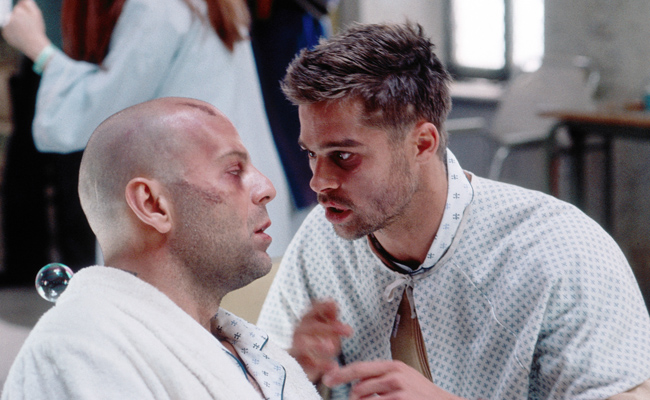
12 Monkeys is based on the 1962 short film La Jetée. Terry Gilliam was chosen to direct because his aesthetic fit the film’s premise. Gilliam had just abandoned a film adaptation of A Tale of Two Cities, but he felt the script was too complex to film. Because of Gilliam’s history with Universal, which was going to distribute the film as it did with Brazil, he asked for and was granted final cut. Even with a confirmed budget of $29.5 million, Universal took longer than expected to greenlight the film because of spiraling cost issues experienced with Waterworld‘s production. Gilliam asked Bruce Willis to lower his usual fee to help get the production approved. Gilliam initally wanted to case Nick Nolte and Jeff Bridges, but Universal objected. Nicholas Cage and Tom Cruise were suggested but Gilliam rejected them. He also did not feel Brad Pitt was right for the role of Jeffrey Goines, but the casting director convinced him otherwise. Pitt was relatively unknown at the time of his casting, but by the time the film was released, he had become known with Interview with the Vampire, Legends of the Fall and Se7en, making him an A-list actor which helped boost 12 Monkeys at the box office. The film was shot in Philadelphia and Baltimore. Continuity errors arose due to the non-linear storyline, which required some scene to be reshot. There were also glitches with the futuristic props, but Gilliam stayed on budget — despite also being injured while horseback riding — and was only a week over schedule. There was no access to soundstages so filming had to take place in abandoned buildings or at landmarks. The climactic airport scene had exteriors filmed at Baltimore-Washington International Airport, while interiors were filmed at the Pennsylvania Convention Center. The 2035 underground world used only pre-1996 technology to depict the bleakness of the future. Brad Pitt was Oscar-nominated for Best Supporting Actor, and the Costume Design was also nominated. Pitt was also nominated for and won the Golden Globe for Supporting Actor. The film spawned a four-season Syfy TV series.
A Close Shave is the third installment of the Wallace & Gromit series. The film won the Oscar for Best Animated Short. A spin-off TV series, Shaun the Sheep, premiered in 2007.
Dead Man Walking marked the film debut of Peter Sarsgaard. Susan Sarandon nearly dropped out of the film, after convincing her partner Tim Robbins to option the story, fearing being directed by Robbins would strain their relationship. Sarandon experienced tension with partner Louis Malle while filming Pretty Baby and Atlantic City. Robbins only considered Sean Penn for the role of Matthew Poncelet. Two versions of Poncelet’s execution were filmed, one in which he experiences a reaction to the first shot of the lethal dose and convulses, and a second more subdued version. The second version was used in the film. The film earned four Oscar nominations including Best Director, Best Actor and Best Original Song, with Sarandon winning Best Actress. It also earned three Golden Globe nominations.
Mr. Holland’s Opus earned Golden Globe nominations for Best Screenplay and Best Actor – Motion Picture Drama (Richard Dreyfuss), and Dreyfuss was also nominated for the Best Actor Oscar. Restoration was Oscars for Art Direction and Costume Design.
2005
- December 25 – Casanova (USA, limited, The Mark Gordon Company)
- December 25 – Rumor Has It… (USA/Canada, Section Eight-Spring Creek)
- December 25 – The New World (USA, limited, New Line Cinema)
- December 25 – The Producers (USA, Brooksfilms)
- December 30 – The Matador (USA, Furst Films-Irish Dreamtime Productions)
Casanova was released nationwide in the US on January 6, 2006. Rumor Has It… first opened in Switzerland on December 22, 2005. The New World received a wide release in the US and Canada on January 20, 2006. The Producers first received a limited release in the US and a wide release in Canada on December 16, 2005. The Matador first opened in France on November 16, 2005, and entered wide release in the US on January 27, 2006.
Kathy Bates and George Hamilton have uncredited roles in Rumor Has It…
The New World is the fourth feature film written and directed by Terrence Malick. It was also Malick’s first collaboration with cinematographer Emmanuel Lubezki, who was Oscar-nominated for his work. A 150-minute cut of the film, which was to have been released in November 2005, was released for a week between December 25 and January 1 to qualify for the Academy Awards. For the January 20 wide release, Malick re-cut the film to 135-minutes, while also adding footage not seen in the 150-mimnute version. Substantial changed were made to the first 30 minutes to speed the plot along. A 172-minute ‘Extended Cut’ was released to home video. All three versions had been available in various formats, but in 2016 they were all released by The Criterion Collection.
Nathan Lane, Matthew Broderick, Gary Beach and Roger Bart reprised their Broadway roles in the film version of The Producers. Nicole Kidman was originally cast as Ulla but backed out due to other commitments, replaced with Uma Thruman. Ernie Sabella, who co-starred with Lane and Broderick in The Lion King, has an uncredited cameo in a deleted scene.
In The Matador, the character of Julien travels to Vienna, Las Vegas, Moscow, Sydney, Budapest, Tucson and Manila, but the film was shot entirely in Mexico City. The first cut of the film was two hours and ten minutes long, but was cut to 97 minutes for release. Pierce Brosnan was Golden Globe-nominated for Best Actor – Motion Picture Musical or Comedy.
2015
New Regency Productions
- December 25 – Concussion (USA/Canada, Scott Free-Shuman Company-GaraFilms-Cantillon Company)
- December 25 – Daddy’s Home (USA/Canada, Gary Sanchez Productions)
- December 25 – Joy (USA/Canada, Annapurna Pictures-Davis Entertainment)
- December 25 – Point Break (USA/Canada, DMG Entertainment-Studio Babelsberg)
- December 25 – The Hateful Eight (USA/Canada, limited, The Weinstein Company)
- December 25 – The Revenant (USA, limited, New Regency Productions)
- December 30 – Anomalisa (USA, limited, Paramount Animation-HanWay Films)
Joy first opened in Greece and Israel on December 24, 2015. Point Break first opened in Hong Kong on December 3, 2015. The Hateful Eight entered wide release in the US on December 30, and in Canada on December 31, 2015. The Revenant was released nationwide in the US and Canada on January 8, 2016.
Will Smith was nominated for a Golden Globe for his performance in Concussion, and he also earned a Razzie Redeemer Award nomination for making a comeback after several commercial or critical failures.
Tony Hawk was Will Ferrell’s stunt double for a skateboarding scene in Daddy’s Home. Jennifer Lawrence received her fourth Oscar nomination for Joy, making her the youngest performer with four nominations. She was also nominated for the Golden Globe and the film was nominated as well.
Director Ericson Core’s pitch for Point Break differed significantly from the script that had been lying around for years, with many scenes that defied the laws of physics. Gerard Butler was in talks to play the role played by Patrick Swayze in the original film, but negotiations fell through and Édgar Ramírez was cast. James LeGros and BoJesse Christopher, who appeared as Ex-Presidents in the original film, had roles as FBI agents in the remake. Using actual extreme sports stars and stuntmen, the film relied on practical stunts rather than special effects and visual trickery. The wingsuit sequence was filmed in Switzerland and required five stuntmen plus the cameraman, flying in formation through narrow mountain passes.
Quentin Tarantino originally conceived The Hateful Eight as a novel and sequel to Django Unchained before deciding to make it a stand-alone film. When the script leaked in 2014, he returned to the idea of publishing it as a novel, but after a live reading of the script, he considered a rewrite and resumed the film project. The film marks Ennio Morricone’s first full-length score for a Western in 34 years, and was the last before his death in 2020, earning his only Oscar win after five previous nominations. Tarantino approached Jennifer Lawrence for the role of Daisy Domergue, but she had to pass due to commitments to Joy and The Hunger Games. Jennifer Jason Leugh was cast in the role. Kurt Russell accidentally destroyed an antique guitar on loan from the Martin Guitar Museum when someone failed to swap it out with a prop. Leigh’s reaction to the incident is genuine. As a result of the incident, the Museum no longer lends out props to film productions. Tarantino’s initial ‘roadshow’ version of the film runs 187 minutes, with a three-minute overturn, a twelve-minute intermission and additional dialogue and alternate takes. The general release version runs 168 minutes. The film’s other Oscar nominations include Best Supporting Actress (Leigh) and Best Cinematography.
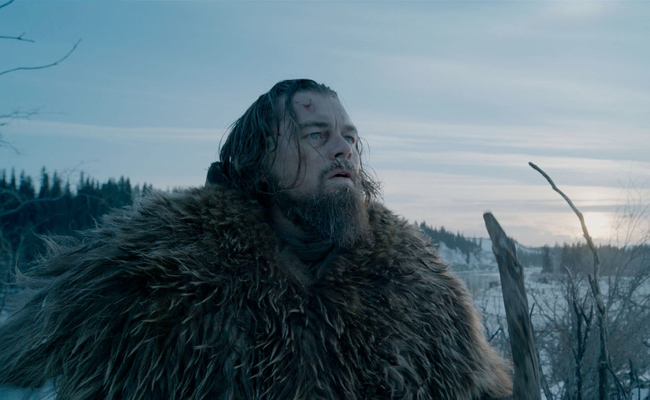
A planned two-week production break on The Revenant extended to six weeks, which forced Tom Hardy to drop out of Suicide Squad. Crew members complained about the difficulties of filming, with many quitting or being fired. The film received a total of twelve Academy Award nominations, including Best Picture. Alejandro G. Iñárritu received the Best Director Oscar for a second consecutive time, and cinematographer Emmanuel Lubezki won his third consecutive Oscar. Leonardo DiCaprio won his first Oscar for Best Actor after five previous nominations. Tom Hardy was nominated for Supporting Actor. The film won three Golden Globes in the Drama category: Best Motion Picture, Best Director and Best Actor. It was also nominated for Best Original Score.
Anomalisa was the first R-rated film to be nominated for Best Animated Feature Film. It was also nominated for the Golden Globe. It was also the first animated film to win the Grand Jury Prize at the Venice International Film Festival. It also received five Annie Awards nominations. The film’s stop motion puppets were created with 3D printers, with multiple copies of each character. The film was in production for more than two years.