
The Douglas S. Cramer Co.
While it was a big week for new series premieres, and three TV movies, across the decades — with only 1956 offering nothing new — very few of the new shows made much of an impact. The exceptions include a 1976 superhero TV series, a 1996 supernatural drama and a reality series (all three of which had runs on multiple networks), a 2006 telenovel with a short run but historic ratings, and a 2016 drama that earned a second season ten years later. Scroll down to see all of the programs that premiered this week, and tell us in the comments if any of your favorites are celebrating milestone anniversaries.
1956
- No new shows premiered this week in 1956.
1966
- April 22 – The Poppy Is Also a Flower (ABC, TV movie)
The Poppy Is Also a Flower, a spy/anti-drug film, was made under the guidance of the United Nations, the last of four television specials to promote the organizations’ work. The film was cut to 80-minutes for broadcast in the US, with 10-minutes of commercial time for the 90-minute time slot. A theatrical release was expanded to 100-minutes. The cast, including major stars like Yul Brynner, Angie Dickinson, Rita Hayworth, E.G. Marshall, Marcello Mastroianni, Omar Sharif and Eli Wallach, received $1.00 each for their work. Princess Grace of Monaco was the narrator. Wallach won a Best Supporting Actor Emmy Award for his performance. The story was based on an idea by Ian Fleming. Director Terence Young made the film after completing work on the James Bond film, Thunderball.
1976
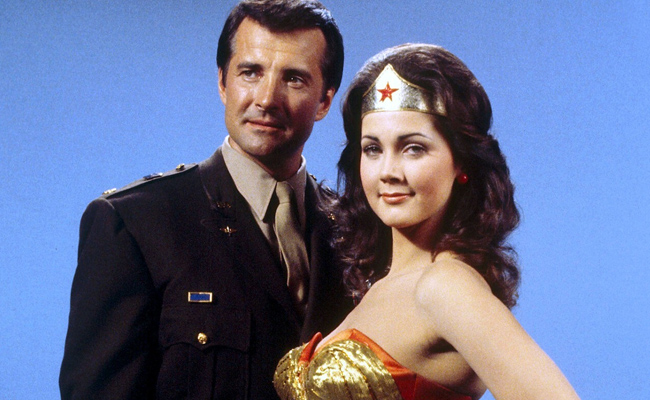
- April 21 – Wonder Woman (ABC/CBS, Three seasons, 59 episodes, 1 pilot)
The pilot movie for Wonder Woman was broadcast on November 7, 1975. ABC commissioned two one-hour episodes for April 1976, which are considered part of the first season. An additional 11 episodes were ordered for the 1976-1977 TV season, with new episodes airing weeks apart until mid-December, when it aired weekly until mid-February 1977. The transition effect between Diana Prince and Wonder Woman was originally just a slow dissolve between two shots, with the bright flash added after the third episode (however the flash and thunderclap sound effect were only seen and heard by the TV audience, not within the narrative world of the show). During the first season, Wonder Woman had the ability to imitate anyone’s voice, which came in handy for phone calls. This was dropped in Seasons 2 and 3. Despite the show’s success, ABC had reservations about renewing it as the World War II setting made the show expensive to produce. While ABC stalled, CBS made an offer to Warner Bros., and CBS agreed to pick up the show if the setting was changed to contemporary times. Due to Diana’s Amazonian nature, she ages slowly and appeared exactly the same in the new season, set 35 years after the first (and retitled The New Adventures of Wonder Woman). Lyle Waggoner’s original character, Major Steve Trevor, is said to have died during the 35 years between seasons, but Waggoner returned to the series, along with Lynda Carter, as Steve Trevor Jr. The new storyline made it clear that Trevor Sr. had never mentioned his son to Diana, and that while Steve Jr. had heard stories of his father fighting with Wonder Woman during the war, the two had never been introduced. Because Wonder Woman had fallen in love with the senior Trevor, the producers chose to avoid any romantic intentions with his son, keeping them as just good friends. The only other character to carry over from the first season was Diana’s mother, Hippolyta, but played by a different actress, Beatrice Straight. Carolyn Jones and Cloris Leachman had previously played the character. Additional changes were made to update the theme song and opening titles, and the animated stars that were used before and after commercial breaks were dropped. Wonder Woman’s costume was also slightly redesigned for Season 2 with a more flexible and lower cut bustier, and a higher cut bottom with less stars. The bracelets were also changed from silver-grey to gold and were noticeably smaller. Wonder Woman was also given a blue lycra diving suit for aquatic activities, and when boots were added it doubled as a motorcycles-riding uniform. An updated version of the invisible jet appeared in a few Season 2 episodes, but was not in Season 3 at all. Changes were again made for Season 3 to appeal to younger audiences, including a re-do of the theme song with a disco beat, with plot lines involving topics like skateboarding (allowing for Wonder Woman to get a new ‘extreme sports’ uniform as well). Diana often went on assignments by herself and Steve, who had become her boss, was seen less. Wonder Woman was also allowed to become more physical in Season 3, throwing an occasional punch or kick, and she had some new powers like being able to telepathically communicate with animals. In anticipation of a fourth season, the final Season 3 episode featured a soft reboot which moved Diana to the Los Angeles bureau of the IADC, with a new supporting cast. CBS, however, aired the episode out of order with the two-part episode, ‘The Phantom of the Roller Coaster’, in August and September of 1979, months after the last episode of the series aired. CBS moved The Incredible Hulk to Wonder Woman‘s 8:00 PM Friday time slot in order to introduce the new series, The Dukes of Hazzard. After Lynda Carter’s first musical special, she gave up the series to pursue a musical career.
1986
- April 20 – Act of Vengeance (HBO, TV movie)
- April 24 – Bridges to Cross (CBS, One season, 6 episodes)
- April 25 – Leo & Liz in Beverly Hills (CBS, One season, 6 episodes)
Act of Vengeance featured star Charles Bronson in an atypical role, from being non-violent to not wearing his signature moustache. He dropped out of a lead role in The Delta Force to make the movie. The cast includes Ellen Burstyn, Wilford Brimley and Ellen Barkin, with an early appearance by Keanu Reeves. The film was released on VHS, but has never been released on DVD or Blu-ray.
Bridges to Cross starred Suzanne Pleshette, Nicolas Surovy, Roddy McDowall, Jose Ferrer, Eva Gabor and Nancy Cartwright.
The pilot for Leo & Liz in Beverly Hills, an updated, less rural spin on The Beverly Hillbillies, aired in 1975 as part of George Burns Comedy Week. The series starred Harvey Korman and Valerie Perrine.
1996
PMP Legacy Productions
- April 20 – Power Rangers Zeo (FOX Kids, One season, 50 episodes)
- April 20 – Soul of the Game (HBO, TV movie)
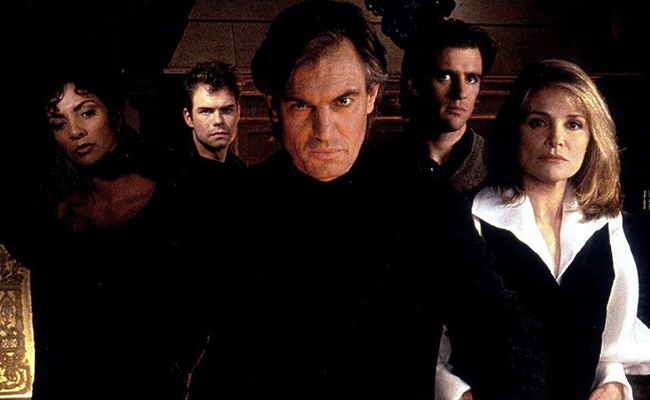
- April 21 – Poltergeist: The Legacy (Showtime/Sci-Fi Channel, Four seasons, 87 episodes)
- April 23 – Forensic Files (TLC/Court TV/truTV, Fourteen seasons, 406 episodes, 6 specials)
Power Rangers Zeo is the third series in the Power Rangers franchise, a continuation of Mighty Morphin Power Rangers.
Soul of the Game was released as Field of Honor in the UK. The story is about the Negro Baseball League, and starred Delroy Lindo, Mykelti Williamson, Blair Underwood, Edward Herrmann and E. Lee Ermey.
Poltergeist: The Legacy ended on Showtime after three seasons, but the series was picked up by Sci-Fi Channel for an additional season. A spin-off was proposed for Sci-Fi after the end of the series, to be titled Poltergeist: The Beginning, but it never materialized. The series has no connection to the Poltergeist film franchise aside from both being produced by MGM, which used the title on the series for audience recognition. The cast included Derek de Lint, Martin Cummins, Robbi Chong and Daniel J. Travanti.
Forensic Files was originally known as Medical Detectives for the first four seasons, then changed to Forensic Files after the acquisition by Court TV. Reruns were retitled Mystery Detectives before settling on the more familiar name in 2014. Peter Thomas narrated most of the episodes, with Peter Dean filling in when Thomas had scheduling conflicts. The series was revived in 2020 as Forensic Files II, with Bill Camp as the new narrator following the death of Thomas.
2006
- April 24 – La Fea Más Bella (Univision, One season, 300 episodes)
La Fea Más Bella translates to The Most Beautiful Ugly Girl, and is a Mexican version of the Columbian telenovela, Yo soy Betty, la fea, which was adapted for American television as Ugly Betty. La Fea Más Bella has the most-watched finale in the history of Mexico, with over 19 million viewers tuning in. Jaime Camil had to leave a Broadway show to appear on the series. Airing on Univision and Spanish-language WB and UPN channels in the US, ratings generally topped those of ABC, CBS and NBC, with the exception of America’s Got Talent.
2016
The Ink Factory
- April 19 – Containment (The CW, One season, 13 episodes)
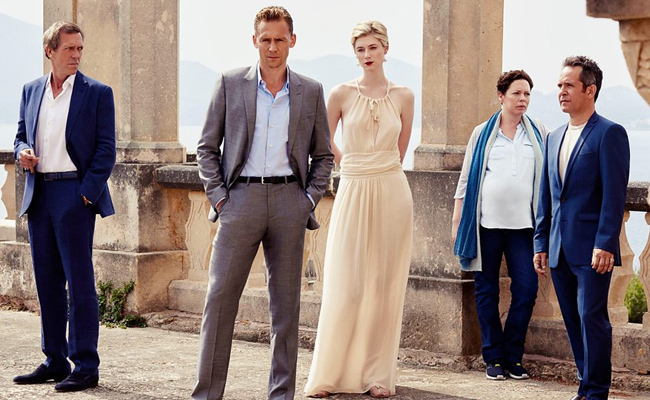
- April 19 – The Night Manager (AMC/Prime Video, Two seasons, 12 episodes to date)
- April 20 – There Goes The Motherhood (Bravo, One season, 8 episodes)
- April 20 – Get Blake! (Nicktoons, One season, 26 episodes)
- April 21 – Comedy Knockout (truTV, Three seasons, 83 episodes)
Containment was a limited series based on the Belgian series Cordon. The CW had the option to continue after the initial run but chose to keep it as a limited series.
Season 1 of The Night Manager was nominated for 36 different awards, winning two Emmys and three Golden Globes. A second and third season were announced in 2024, with Season 2 premiering in January 2026. Tom Hiddleston and Olivia Colman reprised their roles in Season 2, with co-star Hugh Laurie as an executive producer.
Animated series Get Blake! was announced in 2012 as Blake and the Aliens. The show was to originally air on Nickelodeon in the US, but was moved to Nicktoons. Comedy Knockout was a stand-up comedy game show hosted by Damien Lemon.