
Arnold Kopelson Productions
As we head into the Fall season, now known as awards season with end of year deadlines for films to be considered for the Oscars and other organizations, a large number of films were released this week across the century (though the Oscars did not exist in 1925). From a wide variety of titles, several were recognized for Oscars and Globes, while in later decades there are quite a few that got less prestigious awards notice, including one 1995 film that has gone on to true cult status … even though it basically destroyed the career of its lead actress. So let’s dive right in and take a look at all of the films released this week. Are any of your favorites celebrating milestone anniversaries? Tell us in the comments section below!
1925
- September 18 – Tessie (USA, Arrow Film Corporation)
- September 19 – His Majesty, Bunker Bean (USA, Warner Bros. Pictures)
- September 19 – Ranchers and Rascals (USA, William Steiner)
- September 20 – A Man of Nerve (USA, Robertson-Cole Pictures Corporation)
- September 20 – Manhattan Madness (USA, Fine Arts Pictures Inc.)
- September 20 – Spook Ranch (USA, Universal Jewel)
- September 20 – Sun-Up (USA, Metro-Goldwyn-Mayer)
- September 20 – The Freshman (USA, The Harold Lloyd Corporation)
- September 20 – The Live Wire (USA, C.C. Burr Productions)
- September 20 – The Outlaw’s Daughter (USA, Blue Streak Western)
- September 20 – The Timber Wolf (USA, Fox Film Corporation)
- September 20 – The Wheel (USA, Fox Film Corporation)
- September 20 – Three of a Kind (USA, Gothic Productions)
- September 21 – The Coast of Folly (USA, Famous Players-Lasky Corporation)
- September 22 – The Circle (USA, Metro-Goldwyn-Mayer)
The survival statuses of Ranchers and Rascals, A Man of Nerve, and The Outlaw’s Daughter are currently unknown, while Tessie, The Timber Wolf, The Wheel, and Three of a Kind are considered lost films.
An incomplete print of His Majesty, Bunker Bean survives.
Manhattan Madness, a remake of a 1916 film of the same name, starred real-life married couple Jack Dempsey and Estelle Taylor. The film is preserved at the Library of Congress and George Eastman House Motion Picture Collection.
White actor Ed Cowles, in blackface, plays the sidekick of star Hoot Gibson in Spook Ranch. This film is preserved in the Museum of Modern Art and Filmoteca de Catalunya, Barcelona.
A print of Sun-Up is preserved by Metro-Goldwyn-Mayer in their studio library. The Freshman was selected for preservation in the National Film Registry in 1990.
An incomplete print of The Live Wire is held by the Library of Congress and George Eastman Museum Motion Picture Collection. Three of a Kind is better known as Three Wise Crooks.
Gloria Swanson plays the dual roles of mother and daughter in The Coast of Folly. Richard Arlen shot scenes that were all cut from the final film. The film is thought to exist though it has been classified as lost.
The Circle was remade by MGM with sound in 1930 as Strictly Unconventional. A 35mm print of the film survives today at the George Eastman Museum.
1935
Metro-Goldwyn-Mayer
- September 19 – She Married Her Boss (USA, Columbia Pictures)
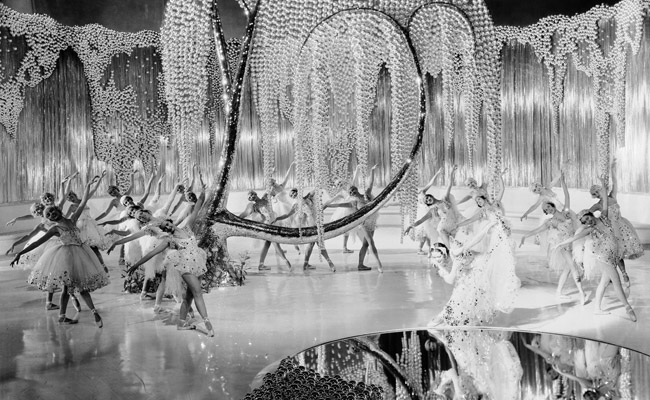
- September 20 – Broadway Melody of 1936 (USA, Metro-Goldwyn-Mayer)
- September 20 – The Big Broadcast of 1936 (USA, Paramount Pictures)
- September 20 – Thunder in the Night (USA, Fox Film Corporation)
- September 21 – The Goose and the Gander (USA, Warner Bros. Pictures)
- September 23 – Abdul the Damned (UK, Alliance-Capital Productions)
- September 23 – Skybound (USA, C.C. Burr Productions)
- September 24 – The Crime of Dr. Crespi (USA, Liberty Pictures)
Abdul the Damned, also known as Abdul Hamid, first opened in London on May 20, 1935, and was released in the US on May 9, 1936.
While Broadway Melody of 1936 is a follow-up to 1929’s Broadway Melody, there is no story connection between the films. The film earned Oscar nominations for Best Picture, Best Writing and Best Dance Direction. It could be the first sequel nominated for Best Picture.
The Big Broadcast of 1936 is the second film in the Big Broadcast series. It also received an Oscar nomination for Best Dance Direction. The film has not been released to home video but is available online. The film serves as a precursor to the Crosby-Hope Road pictures. Ethel Merman appeared in the number ‘We’re Not Dressing’, but the scene was cut from the final film.
1945
- September 18 – Blazing the Western Trail (USA, Columbia Pictures)
- September 18 – Outlaws of the Rockies (USA, Columbia Pictures)
- September 21 – Hockey Homicide (USA, short, Walt Disney Productions)
- September 21 – River Gang (USA, Universal Pictures)
- September 22 – Flirty Birdy (USA, short, Metro-Goldwyn-Mayer)
Blazing the Western Trail was the sixth of 65 Durango Kid movies. Outlaws of the Rockies was the fifth film in the Durango Kid series.
Most of the players’ names in the Goofy sports short Hockey Homicide are the names of Disney staffers. Goofy voice artist Pinto Colvig had left the studio by the time the film was made, so archived voice tracks were used.
River Gang was originally conceived as a vehicle for Universal’s singing star Deanna Durbin, titled Fairy Tale Murder, but she rejected the script so it was adapted as a tough teen drama similar to Universal’s Little Tough Guy action films. Universal contract player Gloria Jean was cast as she was at the end of her contract and the project would fulfill her obligation to the studio. She left after production was complete, but the film was shelved for nearly a year, and it was finally released with the title River Gang. It retained the original title for markets outside the US.
1955
- September 18 – Jail Busters (USA, Allied Artists Pictures)
- September 19 – Tiger by the Tail (Sweden, Tempean Films)
- September 20 – Cast a Dark Shadow (UK, Lewis Gilbert Productions)
- September 21 – Killer’s Kiss (New York City)
- September 21 – Tennessee’s Partner (USA, Filmcrest Productions)
- September 22 – My Sister Eileen (USA, Columbia Pictures)
- September 23 – Kiss of Fire (New York City, Universal International Pictures)
Tiger by the Tail was released in the US in January 1958 as Cross-Up. Cast a Dark Shadow was released in the US on November 27, 1957. Killer’s Kiss expanded nationwide in the US on October 1, 1955. Kiss of Fire entered wide release in the US on November 1, 1955.
Jail Busters is the 39th film in the Bowery Boys series. The working title was Doing Time, and is the only film in the series without female characters.
Tiger by the Tail marked the first acting role for Larry Parks in four years due to the Communist witch hunt conducted by the House Un-American Activities Committee.
Janet Green, who wrote the play upon which Cast a Dark Shadow was based, wanted Dirk Bogarde to be in the play but he declined. After Lewis Gilbert saw the play, he convinced Bogarde to take the role for the film. Bogarde then persuaded Margaret Lockwood to co-star.
Killer’s Kiss was the second film directed by Stanely Kubrick. The film was originally titled Kiss Me, Kill Me. Kubrick attempted to shoot the film with live sound, but he fired his sound man due to the intrusion of the microphone into the lighting scheme. Kubrick shot the film silent and post-dubbed it as he did with his first film, Fear and Desire. The film is notable for its shots in old Penn Station, which was demolished in 1963, and Times Square, as well as other New York City locations. Future TV journalist Chris Chase made her acting debut, billed as Irene Kane. United Artists recut the film for a happy ending without Kubrick’s approval.
As explained in the Broadway musical Jersey Boys, a line in Tennessee’s Partner inspired one of The Four Seasons’ biggest hits, when John Payne smacks Rhonda Fleming across the mouth and asks, ‘What do you think of that?’, and she replies, ‘Big girls don’t cry.’
My Sister Eileen is based on the 1940 play Wonderful Town, which was originally filmed in 1942. This 1955 musical is unrelated to the 1953 Broadway musical Wonderful Town, even though they are both based on the same source material. The film rights had been sought for the musical Wonderful Town in 1953 but proved too expensive, so new songwriters were hired to write a different score. A studio attorney was then assigned to make sure My Sister Eileen bore no resemblance to the source material, requiring musical numbers to be positioned at different places in the story. Judy Holliday was cast as Ruth Sherwood, but got into a contract dispute with the studio and was replaced by Betty Garrett, who had been essentially blacklisted due to her marriage to Larry Parks. It would be her first screen appearance in six years. Bob Fosse choreographed the musical sequences. Aldo Ray turned down the role of Ted Loomis as being too small, so it was given to Columbia contract player Dick York.
1965
- September 19 – The Crooked Road (West Germany)
- September 22 – Frankenstein Meets the Space Monster (USA, Vernon-Seneca Films)
- September 23 – Mirage (UK, Universal Pictures)
- September 24 – Marriage on the Rocks (USA, A-C Productions-Sinatra Enterprises)
The Crooked Road first opened in the US on February 3, 1965. Mirage first opened in the US on May 26, 1965.
Frankenstein Meets the Space Monster was filmed in Florida and Puerto Rico. Despite the title, neither Dr. Frankenstein nor his Monster appear in the film, however the android astronaut character is partially built from human pieces and is named Frank. The film is known in the UK as Duel of the Space Monsters. Alternate titles include Frankenstein Meets the Space Men, Mars Attacks Puerto Rico, Mars Invades Puerto Rico and Operation San Juan.
Though Mirage is based on the 1952 novel Fallen Angel by Howard Fast, writing as Walter Ericson, the novel is not credited on-screen. The film was written as a follow-up to Charade, with cast members Walter Matthau and George Kennedy carried over.
Marriage on the Rocks would be the last film to feature Frank Sinatra and Dean Martin until they cameoed in 1984’s Cannonball Run II. The film’s original title was Divorce American Style, but the screenplay was deemed offensive and rewritten as Community Property before being given its final title. Fourteen minutes were cut after an underwhelming preview. Mia Farrow was originally cast in the film but was replaced at the last minute with Nancy Sinatra. The film’s new title proved prophetic as Nancy and her husband Tommy Sands broke up during filming. The Mexican government was offended by the film’s depiction of the country and banned it and other Sinatra films. Shots of Dean Martin’s actual house appear in the film.
1975

Artists Entertainment Complex
- September 18 – Give ’em Hell, Harry! (USA, Theatrovision)
- September 21 – Confessions of a Pop Performer (UK, Columbia Pictures Corporation)
- September 21 – Dog Day Afternoon (New York City, Artists Entertainment Complex)
Confessions of a Pop Performer has no known US theatrical release date. Dog Day Afternoon entered wide release in the US on December 25, 1975.
Give ’em Hell, Harry!, like the play upon which it is based, is a one-man show about President Harry S. Truman. The play was videotaped for film at the Moore Theatre in Seattle, using a live editing process called Theatrovision. An audio recording of the play was also released by United Artists Records. James Whitmore was nominated for both the Oscar and Golden Globe, and the album won the Grammy for Best Spoken Word Recording.
Al Pacino assisted with the casting process for Dog Day Afternoon, choosing some past co-stars from his Off-Broadway plays. Pacino had backed out of the role at one point, with Dustin Hoffman expressing interest, but producer Martin Bregman felt Pacino was the only person for the role. Discussions were held and Pacino was in but backed out again, with Bregman and director Sidney Lumet assuming it was because of Pacino’s method acting approach to a role and him not wanting to explore the character’s particular world of being a gay man with a transgender partner. After a third rejection of the role, Pacino finally accepted and attributed his behavior to stress and drinking. Charles Durning was cast in the film while he was also working on Robert Wise’s Two People, and his schedule had to be coordinated so he could fly back and forth between Los Angeles and New York City. Production on the film was completed three weeks ahead of schedule. The film earned six Oscar nominations, including Best Picture, Director, Actor and Supporting Actor, winning for Original Screenplay. It also received six BAFTA nominations, with Pacino winning Best Actor, and six Golden Globe nominations. The film was selected for preservation in the National Film Registry in 2009.
1985
- September 19 – Bliss (AUS, Window III Productions)
- September 20 – Creator (USA, Kings Road Entertainment)
- September 20 – Déjà Vu (Spain, Dixon’s Films)
- September 20 – Plenty (USA, Pressman Productions)
Bliss was released in the US on February 21, 1986. Déjà Vu was first released in the US in May 1985.
Tracy Ullman and John Gielgud received BAFTA nominations for their performances in Plenty, and Gielgud was named Best Supporting Actor by both the Los Angeles Film Critics Association and the National Society of Film Critics.
1995
- September 22 – A Month by the Lake (USA, Anuline)
- September 22 – Canadian Bacon (USA, Dog Eat Dog Films)
- September 22 – Carrington (UK, Freeway Films)
- September 22 – Empire Records (USA, limited, A New Regency / Alan Riche and Tony Ludwig Production)
- September 22 – Se7en (USA/Canada, Arnold Kopelson Productions)
- September 22 – Showgirls (USA/Canada, Carolco Pictures)
- September 22 – The Return of the Texas Chainsaw Massacre (USA, limited, Ultra Muchos-River City Films)
- September 22 – The Run of the Country (USA, 129 Productions)
- September 22 – Unstrung Heroes (USA, Roth-Arnold Productions)
Canadian Bacon first opened in Spain on June 8, 1995. Carrington first opened in France on May 2, 1995, and was released in the US on November 10, 1995. Empire Records expanded its released in the US on October 20, 1995.
Vanessa Redgrave received a Best Actress in a Motion Picture Musical or Comedy golden Globe nomination for A Month by the Lake.
Canadian Bacon was shot before Wagons East, which was John Candy’s last film, but Canadian Bacon was released after Wagon’s East making it Candy’s final theatrically released film. Both films are dedicated to his memory. The film was written and directed by Michael Moore, to date his only non-documentary project.
The Rex Manning music video in Empire Records was meant to be 17-seconds long, just enough for the film’s characters to make fun of. Jordan Dawes, the video director, instead shot for an entire day on Wrightsville Beach in North Carolina, producing a full video that was almost five minutes in length. Tobey Maguire was originally in the film, but asked to be released from his contract. Producers agreed and all of his scenes were deleted from the film. Maguire sought treatment for a drinking problem soon after. The film was a box office bomb but has become a cult classic.
New Line Cinema execs were opposed to the bleak ending of Se7en but David Fincher, seeking to re-establish himself after the Alien 3 setback, insisted on filming the ending as written. Test audiences gave the film mixed reviews and the studio felt it would not perform well at the box office, but it became a sleeper hit earning more than $327 million worldwide. Fincher did not see Brad Pitt as the lead but after meeting the actor he felt he was likable and charismatic enough to keep the audience on his side regardless of the character’s actions. To secure Pitt’s involvement — Pitt was eager to take on the role to escape his typecasting as a romantic lead — producers shortened the pre-production schedule from 12 to 5 weeks to accommodate his schedule. Sylvester Stallone and Denzel Washington had both been offered the role but turned it down. The part of Somerset was envisioned for William Hurt but Fincher cast Morgan Freeman over the concerns of the studio, which felt the pairing of a White and Black cop would be derivative of films like Lethal Weapon. Robert Duvall, Gene Hackman, and Al Pacino had rejected the role. The script was then modified to match Pitt’s and Freeman’s acting styles. Christina Applegate rejected the role of Tracy before Gwyneth Paltrow accepted it after Pitt had recommended her from her audition for Legends of the Fall. Fincher wanted Ned Beatty for the role of John Doe, as he resembled a composite drawing of the Zodiac killer, but Beatty declined say the script was the most evil thing he’d ever read. REM’s Michael Stipe was considered but filming conflicted with the group’s tour dates. Christopher Guest was considered, Val Kilmer turned it down, and R. Lee Ermey was rejected because his audition had little sympathy and lacked depth. Pitt wanted Kevin Spacey, but the studio refused to pay his asking price. Doe’s scenes were filmed with an unknown actor, but it was quickly decided to approach Spacey again with Pitt helping to negotiate his involvement. Spacey agreed, and filmed his scenes in twelve days. He then requested his name be omitted from the film’s marketing campaign and opening credits to keep the killer’s identity a secret. While filming on location in Los Angeles, it often rained and Fincher decided to shoot in the rain to avoid continuity errors, and because he only had Pitt for 55 days before he began filming 12 Monkeys. In one scene Fincher had the only light source being a flashlight because he hated movies where a character would talk about how dark it was but the scene was lit so the audience could clearly see what was happening. The studio hated the dark scenes and the cinemaographer suggested printing the scenes brighter but Fincher refused. After a successful promotional reel was screened for theatre owners, complaints about the darkness ceased. During one chase scene, Pitt slipped on a car hood and crashed through the windshield, sustaining injuries to his hand, including cutting tendons and nerves. Fincher said he saw exposed bone. Pitt returned to the set a few days later wearing a forearm cast which had to be written into the scenes that came after the accident. For scenes taking place before the accident but filmed after, Pitt kept his hand hidden to obscure the injury. The location of the final scene in which Doe uses electrical towers to interfere with police radios interfered with the crew’s radios and the actors had to use cell phones to communicate with the crew from afar. Studio execs did not want Pitt’s character to kill Doe at the end, and Freeman preferred a storyboarded segment that had his character kill Doe to save his partner’s career, but it was the ending test audiences preferred. The film received just a single Oscar nomination for Editing, and one BAFTA nomination for Original Screenplay.
Showgirls was the first, and to date only, NC-17 rated film to receive a wide theatrical release in the US. MGM sent staffers around the country to make sure patrons did not sneak into the film after buying tickets for other films, and to make sure anyone seeing the film was over 17. Director Paul Verhoeven prepared an R-rated edition of the film for video retailers that refused to carry NC-17 films (like Blockbuster). Despite the intense negative reactions to the film, and its failure at the box office, it has gained a devoted cult following and has been reappraised as a serious satire worthy of recognition. Several actresses, including Pamela Anderson, Drew Barrymore, Angelina Jolie, Jennifer Lopez and Charlize Theron, were considered for the role of Nomi, which would require dancing skills and extensive full-frontal nudity, and Elizabeth Berkley was the only actress willing to go for it. Madonna and Sharon Stone were considered for the role of Cristal before Gina Gershon was cast. Dylan McDermott was the first choice for Zack, but he turned it down and Kyle MacLachlan accepted the part. Following the film’s release, Berkley was dropped by her agent and other agents refused to take her calls. Verhoeven later lamented the impact the film had on Berkley’s career, taking the blame for directing her to give the performance she gave. The film earned a record 13 Razzie Awards nominations, winning a then-record seven including Worst Picture, Director and Actress, adding an eighth award in 2000 for Worst Picture of the Last Decade.
The Return of the Texas Chainsaw Massacre was re-released as Texas Chainsaw Massacre: The Next Generation after Columbia TriStar acquired rights to distribute the film theatrically and on home media. It was re-edited and eventually received a limited re-release on August 29, 1997. The film was the directorial debut of Kim Henkel, who wrote the screenplay for the original film. The film features cameos from the original film’s actors Marilyn Burns, Paul A. Partain and John Dugan. A then-unknown Renée Zellweger was the only choice for the role of Jenny after her audition. Matthew McConaughey had just completed Dazed and Confused but was still unknown at the time of his audition, which he nailed by frightening the casting secretary with his line readings. During production, the film’s working title was The Taxidermist: Texas Chainsaw Massacre 4.
The score for Unstrung Heroes received an Academy Award nominations but lost to Disney’s Pocahontas. The original story featured four uncles, but they were combined into two, and the setting was changed from New York City to Southern California. The film performed well at the box office despite reaching a total of 576 screens at its widest release.
2005
Tim Burton Laika Entertainment
- September 22 – Revolver (UK, Toff Guy Films)
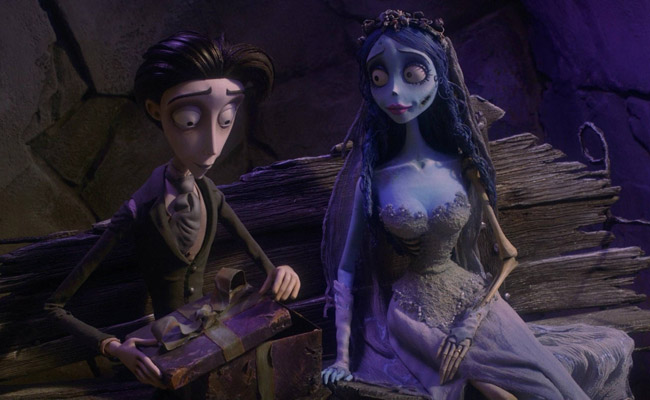
- September 23 – Corpse Bride (USA, Tim Burton Laika Entertainment)
- September 23 – Dirty Love (USA, limited, DEJ Productions)
- September 23 – Flightplan (USA/Canada, Brian Grazer Productions)
- September 23 – Roll Bounce (USA/Canada, State Street Pictures)
Revolver received a limited US release on December 7, 2007. Corpse Bride first opened in Italy on September 12, 2005. Flightplan first opened in Israel on September 22, 2005.
Corpse Bride was the directorial debut of Mike Johnson. Work on the film started in 2003 as Tim Burton was finishing work on Big Fish. Corpse Bride was produced simultaneously with Charlie and the Chocolate Factory and used much of the same cast. The film earned an Oscar nomination for Best Animated Feature.
Dirty Love won four of its six Razzie Awards nominations including Worst Picture and Worst Actress (Jenny McCarthy).
Flightplan is heavily inspired by Hitchcock’s The Lady Vanishes, with many calling it a remake. To mislead the audience as to the identity of the villain, Sean Bean was cast because of his association with villainous roles to make the audience believe he was part of the plot.
2015
- September 18 – A Syrian Love Story (UK, British Film Institute)
- September 18 – Bill (UK, BBC Film)
- September 18 – Captive (USA/Canada, BN Films)
- September 18 – East Side Sushi (USA, Blue Sun Pictures)
- September 18 – Maze Runner: The Scorch Trials (USA/Canada, TSG Entertainment)
- September 18 – Sicario (USA, limited)
- September 18 – The Messenger (London, Gateway Films)
- September 18 – War Pigs (USA, Schuetzle Company Productions)
- September 24 – Pan (AUS, RatPac-Dune Entertainment)
A Syrian Love Story and Bill have no known US theatrical release dates. Captive first opened in Germany on September 17, 2015. Maze Runner: The Scorch Trials first opened in the Philippines on September 9, 2015. Sicario first opened in Israel on September 17, 2015, and expanded to a wide release in the US and Canada on October 2. The Messenger entered general UK release on September 25, 2015, and has no known US theatrical release date. Pan was released in the US and Canada on October 8, 2015.
Bill was from the principal performers behind the UK series Horrible Histories and, later, Ghosts.
Maze Runner: The Scorch Trials is the second film in the Maze Runner series. The film was to be released in IMAX but the plan was cancelled as Everest was booked on all IMAX screens until the release of The Walk. The film had gone into development almost a year before the first film’s release, showing the studio’s confidence in the project.
Sicario received Oscar nominations for Cinematography, Original Score and Sound Editing. War Pigs was released as Saints and Soldiers: War Pigs in international markets. It is the fourth installment in the Saints and Soldiers series, and a stand-alone sequel to Saints and Soldiers: The Void.
Pan is a prequel to the 1904 play Peter Pan; or, the Boy Who Wouldn’t Grow Up. Despite claims the cast would be multi-cultural, the film endured criticism for casting its four leads with white actors, including Rooney Mara as Native American character Tiger Lily, with accusations of whitewashing the character, something Mara later regretted being a part of. Both Mara and Amanda Seyfried earned Razzie nominations for Worst Supporting Actress.