Toho-New World Pictures
Of the films released this week over the past century, there are a few notable ones. 1925 coincidentally has two films containing the word ‘Lightnin” and a silent operetta. 1935 has a film loosely based on a famous 14th century narrative poem, and is best known for its ten minute depiction of The Bad Place. 1955 has the next to last film starring a talking mule, and the very last film to use the three-strip Technicolor process. 1965 brought a classic British sci-fi TV series to the big screen for the first time, and had a beach party movie that had very little to do with the beach. 1985 gave us a John Cusack cult classic comedy, brought reunited Raymond Burr with Godzilla, and saw Michael J. Fox transform. 1995 turned out the second film in what would become a trilogy, saw a Clive Barker character come to life, and had an animated film with a nearly three-decade production process. 2005 had a film that fictionalized the lives of a pair of storytelling brothers, and 2015 had the final scripted film from a storied director. Scroll down to see all the films released this week across the decades, and tell us if any of your favorites are celebrating milestone anniversaries.
1925
- August 21 – Before Midnight (USA, William Russell Productions Inc.)
- August 21 – Crack o’ Dawn (USA, Harry J. Brown Productions)
- August 21 – Quicker’n Lightnin’ (USA, Action Pictures)
- August 23 – Fighting the Flames (USA, Columbia Pictures)
- August 23 – Lightnin’ (USA, Fox Film Corporation)
- August 23 – That Man Jack! (USA, Independent Pictures)
- August 23 – The Knockout (USA, First National Pictures)
- August 23 – The Man Who Found Himself (USA, Famous Players-Lasky Corporation)
- August 24 – Beggar on Horseback (USA, Famous Players-Lasky Corporation)
- August 24 – The Street of Forgotten Men (USA, Famous Players-Lasky Corporation)
- August 25 – Heir-Loons (USA, Spitzer Productions)
- August 26 – The Merry Widow (USA, An Erich von Stroheim Production)
The survival status of Before Midnight, Quicker’n Lightnin’, That Man Jack! and Heir-Loons is unknown, while The Knockout and The Man Who Found Himself are considered lost films.
A print of Crack o’ Dawn is held by George Eastman House Motion Picture Collection. A trailer for The Knockout survives at the Library of Congress.
While filming the fire scene in Fighting the Flames, a burning ceiling fell on actor William Welsh, and lead actor William Haines quickly lifted the ceiling off of him, preventing any serious injury. A mostly complete copy, with the end of the final reel missing, is held at the Library of Congress.
Silent comedy Lightnin’ was remade as a talkie in 1930 with Will Rogers. An incomplete print of Beggar on Horseback survives at the Library of Congress.
Louise Brooks makes her uncredited film debut in The Street of Forgotten Men. All but the second reel of the film survives, although the missing reel includes the deaths of two character. In March 2022, the San Francisco Silent Film Festival announced a major restoration of the film.
Joan Crawford and Clark Gable appear in pre-fame uncredited roles in The Merry Widow. Orchestra leader Xavier Cugat also has an uncredited role as an orchestra leader. Star Mae Murray and director Erich von Stroheim clashed during production, and MGM decided it could no longer work with the director after he added sexually explicit material and changed the original operatta’s libretto. Murray’s performance, though, was praised and the film was a box office success.
1935
- August 21 – The Crusades (New York City/London, Paramount Pictures)
- August 23 – Accent on Youth (USA, Paramount Pictures)
- August 23 – Annapolis Farewell (USA, Paramount Pictures)
- August 23 – Bonnie Scotland (USA, Hal Roach Studios)
- August 23 – Dante’s Inferno (USA, Fox Film Corporation)
- August 23 – Going Highbrow (USA, Warner Bros. Pictures)
- August 23 – Hop-Along Cassidy (USA, Harry Sherman Productions)
- August 25 – Atlantic Adventure (USA, Columbia Pictures)
- August 26 – A Real Bloke (UK, Baxter and Barter Productions)
- August 26 – The Price of Wisdom (UK, British & Dominions Film Corporation)
- August 27 – In Town Tonight (UK, British Lion Film Corporation)
The Crusades entered general release in the US on October 25, 1935, and in the UK on January 20, 1936. A Real Bloke and In Town Tonight have no known US theatrical release dates. The Price of Wisdom made its US premiere on television in Los Angeles on March 27, 1949.
The Crusades received an Oscar nomination for Best Cinematography. While Laurel & Hardy’s Bonnie Scotland begins in Scotland, most of the story takes place in British India.
Dante’s Inferno is primarily remembered for a 10-minute depiction of Hell realised by director Harry Lachman, an established Post-Impressionist painter. It was the last film to be produced by Fox Studios before Fox Film Corporation and 20th Century Pictures merged. It was also Spencer Tracy’s last film for Fox before moving to MGM. In Philadelphia, the red-tinted Hell scenes were projected in Magnascope, an early widescreen process.
Hop-Along Cassidy is the first of 66 Hopalong Cassidy films produced between 1935 and 1948, all starring William Boyd. The film was reissued as Hop-Along Cassidy Enters.
A Real Bloke was produced as a quota quickie for release by MGM in the UK, while The Price of Wisdom was a quota quickie released by the British arm of Paramount Pictures.
1945
- August 25 – Swing Shift Cinderella (USA, short, Metro-Goldwyn-Mayer)
- August 27 – The True Glory (UK, documentary, Ministry of Information/U.S. Office of War Information)
The True Glory was released in the US on October 4, 1945. While Carol Reed receives the credit for directing, Garson Kanin also contributed to the film. Paddy Chayefsky wrote the script. The film won the Oscar for Best Documentary feature.
1955
Universal International Pictures
- August 23 – Foxfire (USA, Universal International Pictures)
- August 23 – The Deep Blue Sea (London, London Film Productions)
- August 24 – Apache Ambush (USA, Columbia Pictures)
- August 24 – Francis in the Navy (USA, Universal International Pictures)
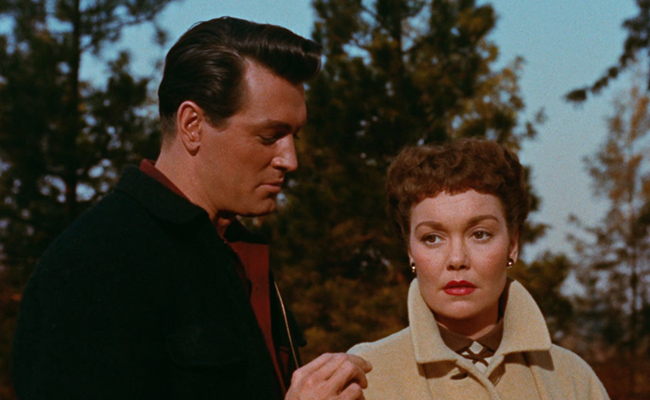
- August 25 – All That Heaven Allows (UK, Universal International Pictures)
- August 25 – The Woman for Joe (UK, Group Film Productions Limited)
- August 25 – You’re Never Too Young (USA, Paramount Pictures)
The Deep Blue Sea went into general release in the UK on October 17, 1955, and was released in the US on November 1 following a New York City engagement beginning October 13. All That Heaven Allows was released in the US on December 25, 1955. The Woman for Joe has no known US theatrical release date.
Foxfire was the last American film to be shot in three-strip Technicolor, which had been supplanted by the cheaper, but coarser-grained and less chromatically saturated Eastmancolor single-strip process. The novel upon which the film is based was set during the Depression and Prohibition, but the film is updated to then contemporary times, which resulted in the story being substantially reworked though characters, locations and plot points were retained. June Allyson was annouced to star but she dropped out and was replaced with Jane Russell, who earned $200,000 and the right to use co-star Jeff Chandler in a film for her own production company.
Francis in the Navy is the sixth film in the Francis the Talking Mule series, and marks the first credited role for Clint Eastwood. The film’s working title was Francis Weighs Anchor. Star Donald O’Connor did not want to make the film, but agreed to do one more at the request of his daughter (and with a financial inducement from the studio). Director Arthur Lubin later stated that O’Connor was bored on this last film and was difficult and unpleasant to work with.
Director Douglas Sirk considered killing off Rock Hudson’s character at the end of All That Heaven Allows, but producer Ross Hunter would not allow it, wanting a more positive ending. Some exterior shots were film on ‘Colonial Street’ at Universal Pictures, which had been used in The Desperate Hours. The set was later featured on Leave It to Beaver and Desperate Housewives. The film was selected for preservation in the National Film Registry in 1995.
You’re Never Too Young is a gender-swapped remake of The Major and the Minor. Diana Lynn had previously appeared with stars Dean Martin and Jerry Lewis in My Friend Irma and its sequel, My Friend Irma Goes West. She also appeared in The Major and the Minor.
1965
- August 23 – Dr. Who and the Daleks (UK, AARU Productions)
- August 23 – Rapture (USA, Panoramic Productions)
- August 25 – Clay (AUS, Georgio Mangiamele Production)
- August 25 – Morituri (USA, Arcola Pictures)
- August 25 – That Funny Feeling (USA, Universal Pictures)
- August 25 – The Skull (USA, Amicus Productions)
- August 25 – Wild on the Beach (USA, Lippert Productions Ltd.)
Dr. Who and the Daleks was released in the US in July 1966. Clay has no known US theatrical release date.
Dr. Who and the Daleks is the first of two feature films based on the Doctor Who TV series, and is the first Who story to be filmed in color and a widescreen format. The Dalek props were rebuilt for the film, giving them a larger base and dome lights, making them more imposing than on the series. The new Daleks were to be fitted with flamethrowers, but the idea was vetoed for safety concerns and because they may have been too frightening for the young audience.
Clay was the first Australian film selected for competition at the Cannes Film Festival. Morituri was the first English-language film for director Bernhard Wicki. It earned Oscar nominations for Best Black-and-White Cinematography and Best Black-and-White Costume Design.
That Funny Feeling was the third film to pair married couple Bobby Darin and Sandra Dee. It was the second film to feature Donald O’Connor and Kathleen Freeman, who appeared first in 1952’s Singin’ in the Rain.
The Skull was Amicus’ attempt to challenge Hammer Films by making a full-length film in color. Christopher Lee has a supporting role, but does not play a villain. The film’s final 25 minutes contain almost no dialog.
Wild on the Beach was one of the rare ‘beach party’ films — though it is not part of the official Beach Party series — to be filmed in black-and-white. The film marks the screen debut of Sonny & Cher. While promoted as a standard beach party movie with photos of the cast in bathing suits on the posters, no one in the film wears a bathing suit and none of them do anything on the beach, except walk on it fully clothed. Lead Frankie Randall wears a windbreaker on top of his shirt for most of the movie. Surf band The Astronauts also appear in the film and perform four songs. The group also backs Sonny & Cher.
1975
- August 21 – The Box (AUS, Crawford Productions)
The Box has no known US theatrical release date. It is based on the Australian soap opera of the same name, and features much of the regular series cast.
1985
Atlantic Entertainment Group
- August 23 – Better Off Dead (USA, limited, CBS Entertainment Productions)
- August 23 – Crossover Dreams (USA, Max Mambru Films)
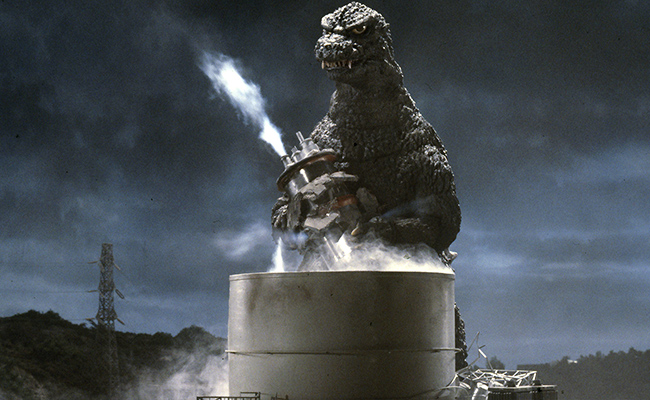
- August 23 – Godzilla 1985 (USA, Toho-New World Pictures)
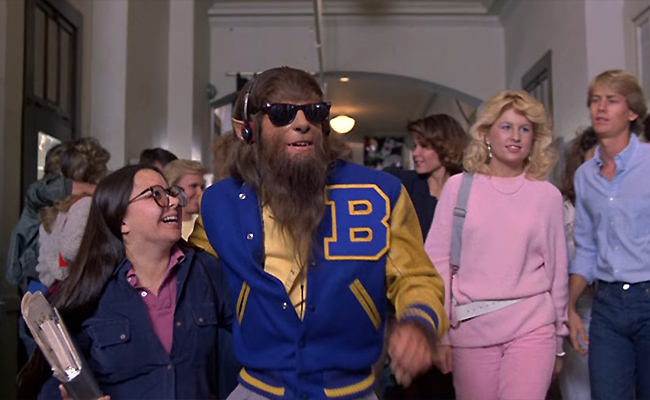
- August 23 – Teen Wolf (USA/Canada, Atlantic Entertainment Group)
Better Off Dead entered wide release in the US on October 11, 1985. Godzilla 1985 first opened in Germany on July 26, 1985.
Crossover Dreams was the first major feature film role for Rubén Blades.
Godzilla 1985 is a heavily re-edited American adaptation of the Japanese film The Return of Godzilla, produced by Toho and released in Japan in 1984. The film also includes new footage produced for the US release featuring Raymond Burr reprising his role as journalist Steve Martin from the 1956 Godzilla, King of the Monsters, which itself was a heavily re-edited American adaptation of the 1954 Japanese film Gojira. The film serves as a direct sequel to the original Gojira. It was the last Godzilla film produced by Toho to receive an American theatrical release until Godzilla 2000. The new footage was shot over three days, but Burr was only on-set for the first day, refusing to work more than eight hours so all of his shots had to be filmed first. He also did not want to memorize his lines, insisting on TelePrompTers placed on set which proved a logistical nightmare for the crew. He also took the anti-nuclear allegory of Godzilla seriously and refused to treat it as a joke. Warren Kemmerling also refused to perform comic material, though not out of respect for Godzilla, so the script was revamped to reassign all the comedic lines to Travis Swords. Soda brand Dr. Pepper launched a $10 million ad campaign for the film and is featured prominently in the new footage. The American version runs 16 minutes shorter than the Japanese version. The film earned two Razzie nominations for Worst Supporting Actor (BUrr) and Worst New Star for the computerized Godzilla.
Teen Wolf came together when Michael J. Fox accepted the lead role and his Family Ties co-star Meredith Baxter-Birney became pregnant, creating a delay in the sitcom’s production that allowed Fox to complete the film and return to the series when it returned to production. The film’s success lead to an animated TV series, a sequel, a live-action MTV TV series and its follow-up film.
1995
- August 25 – Beyond Rangoon (USA, Castle Rock Entertainment)
- August 25 – Desperado (USA/Canada, Los Hooligans Productions)
- August 25 – Dr. Jekyll and Ms. Hyde (USA, Rastar/Leider-Shapiro Productions)
- August 25 – Lord of Illusions (USA, Seraphim Films)
- August 25 – The Amazing Panda Adventure (USA, Lee Rich Productions)
- August 25 – The Thief and the Cobbler (USA, Richard Williams Productions)
The Thief and the Cobbler was first released in Australia on September 23, 1993 as The Princess and the Cobbler.
Desperado is the second part of Robert Rodriguez’s ‘Mexico Trilogy’ following El Mariachi. Quentin Tarantino has a cameo as ‘Pick-up Guy’. Carlos Gallardo, who played El Mariachi in the original film, plays the role of Campa, a friend of Antonio Banderas’ El Mariachi. The film is cited as Salma Hayeks’ breakout in American films. The film received an NC-17 due to its graphic violence and had to be severely cut for an R-rating. Scenes cut include the deaths of Tarantino’s and Danny Trejo’s characters, as well as the entire climax of the film which was a large-scale shootout. Rodriguez felt that the MPAA demanded so much cut from the scene he just removed it entirely, giving the film its current fade-out ending. Two scenes involving a codpiece gun were also removed, but the gun was eventually used in Rodriguez’s unrelated films From Dusk till Dawn and Machete Kills.
Dr. Jekyll and Ms. Hyde marked the second film in which Sean Young and Timothy Daly starred following the 1994 TV movie Witness to the Execution. The film earned three Razzie nominations including Worst Actress (Young), Worst Remake or Sequel and Worst Screen Couple (Daly and Young).
Lord of Illusions features the first on-screen appearance of Clive Barker’s Harry D’Amour, played by Scott Bakula. While based on Barker’s The Last Illusion, the author surprised readers familiar with the original work with a new story and a new villain, while retaining the same principal characters. No other live-action films have featured D’Amour. MGM felt there was too much talking between scenes of death and horror and ordered more than 12 minutes cut from the film. Barker conceded as long as he was assured a director’s cut could be released.
The Thief and the Cobbler began production in the 1960s, and was in and out of production over nearly three decades due to funding issues and the complex animation. Warner Bros. agreed to finance and distribute the film, directed by Richard Williams after his success as the animation director of Who Framed Roger Rabbit. Going over budget, falling behind schedule, and with Disney’s similarly-themed Aladdin on the horizon, Williams was forced out, and the film was heavily re-edited and cheaply completed as a mainstream Disney-style musical. It was eventually released as The Princess and the Cobbler, and released again in 1995 by Disney-owned Miramax as Arabian Knight. Various companies and individuals, including Roy Disney, have discussed restoring the film to its original version, and the Academy of Motion Picture Arts and Sciences has archived Williams’ own 35mm workprint. It is one of the films with the longest ever production time, and marked the last film for several actors, including Sir Anthony Quayle, who died in 1989, and Vincent Price, who died in 1993, one month after the film’s initial release. Many of the main characters were revoiced in the different versions of the film. Price recorded his dialog in 1973.
2005
Mosaic
- August 26 – The Brothers Grimm (USA/Canada, Mosaic)
- August 26 – The Cave (USA/Canada/UK, City Productions)
- August 26 – Undiscovered (USA, Cinejota Filmproduktionsgesellschaft mbH & Co.)
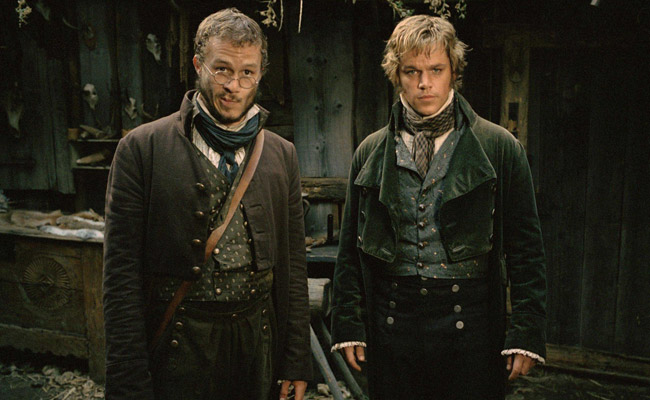
After MGM picked up Ehren Kruger’s spec script for The Brothers Grimm, Terry Gilliam and Tony Grisoni rewrote it but the WGA refused to grant them credits for their work, so Kruger retains sole writing credit. MGM had difficulties financing the film and dropped out as the main distributor. Dimension Films made a deal with MGM and Summit to co-finance and be the lead distributor. Johnny Depp was Gilliam’s first choice for Will Grimm, but Bob Weinstein didn’t feel he was famous enough for the role, which went to Matt Damon. Weinstein regretted his decision as halfway through production Pirates of the Caribbean was released, which made Depp a huge sensation. Heath Ledger was compared to Depp and Gilliam had intended to cast the two opposite each other. Damon and Ledger were originally cast in opposite roles before asking to have their characters switched. Due to Bob and Harvey Weinstein’s constant meddling, they and Gilliam clashed throughout production. Gilliam later learned that Martin Scorsese had a similar experience with the brothers while making Gangs of New York.
Undiscovered was originally titled Wannbes. It featured the first significant film role for Ashlee Simpson, who had appeared on TV series 7th Heaven. On August 26, 2005, the film had a record-breaking box office drop of 86.4%, a record that held until the second week of the March 2017 release of Collide at 88.5%.
2015
- August 21 – A Dozen Summers (UK, limited, Monkey Basket Films)
- August 21 – American Ultra (USA/Canada, Likely Story)
- August 21 – She’s Funny That Way (USA, Lagniappe Films)
- August 21 – The Bad Education Movie (UK, Cave Bear Productions)
- August 26 – No Escape (USA/Canada, Brothers Dowdle Productions)
- August 26 – We Are Your Friends (France, Working Title Films)
- August 27 – Holding the Man (AUS, Goalpost Pictures)
- August 27 – Last Cab To Darwin (NZ, Last Cab Productions)
After film festival screenings, A Dozen Summers made its US premiere on home video on August 15, 2016. American Ultra first opened in France on August 19, 2015. She’s Funny That Way first opened in France on April 22, 2015. The Bad Education Movie has no known US theatrical release date. We Are Your Friends was released in Canada and the US on August 28, 2015. Holding the Man was screened at the Seattle International Film Festival but has no US theatrical release date. Last Cab To Darwin was released in the US on June 10, 2016.
She’s Funny That Way was the first film in 13 years directed by Peter Bogdanovich since The Cat’s Meow. It was also the final non-documentary film he directed, and the final film appearance of Richard Lewis. Tatum O’Neal, Graydon Carter, Quentin Tarantino and Michael Shannon make cameo appearances. The film was originally announced in the mid-1990s as Squirrels to the Nuts, with Tatum O’Neal as the lead. The title was changed due to people thinking it was a children’s film. The project was shelved following the death of John Ritter, for whom Bogdanovich had written the lead role of Arnold Albertson. When Bogdanovich cast Owen Wilson in the role, all of the physical gags intended for Ritter were rewritten as verbal jokes to suit Wilson. A copy of Bogdanovich’s original cut of the film was found on eBay in 2020, and the director restored his Squirrels to the Nuts version prior to his death in January 2022. The film was screened on March 28, 2022 at the Museum of Modern Art.
The Bad Education Movie is based on star Jack Whitehall’s British sitcom of the same name.
Though not mentioned explicitly in the film, No Escape is thought to take place in a fictionalized version of Cambodia. Cambodia banned the film. The film was shot in Thailand, and secured a release in the country on the condition the filmmakers agreed to not name the country or portray it in a negative manner. They were also ordered not to show the color yellow, which is the color of the king, and have no Buddhas in the film.
We Are Your Friends was the feature directorial debut of Max Joseph.