
Jackie Gleason Enterprises
As the Fall premiere season begins to wind down, this week across the decades still gave us plenty of memorable series, with the most notable coming in 1955. That year gave us a series that enjoyed a long run after it ended due to its color production, a sitcom that while short-lived is an undisputed classic, a macabre anthology series hosted by a director known for his macabre thrillers, two childrens series, and a police drama that includes a historical footnote. 1965 saw a popular comedy trio get animated, and saw the launch of half a dozen Hanna-Barbera characters. The lone entry for 1975 was a short-lived game show, while 1985 gave us a classic action series and another anthology series from a famous director. 1995 struggled but had one reboot series with a popular animal star, 2005 tried to reboot a cult classic horror series, and 2015 gave big name stars their own series with less-than-stellar results (although one star did win an Emmy). Scroll down to see all the shows that premiered this week over the last 70 years, and tell us if any of your favorites are celebrating milestone anniversaries.
1955
Revue Studios
- September 28 – Brave Eagle (CBS, One season, 26 episodes)
- September 29 – Sergeant Preston of the Yukon (CBS, Three seasons, 78 episodes)
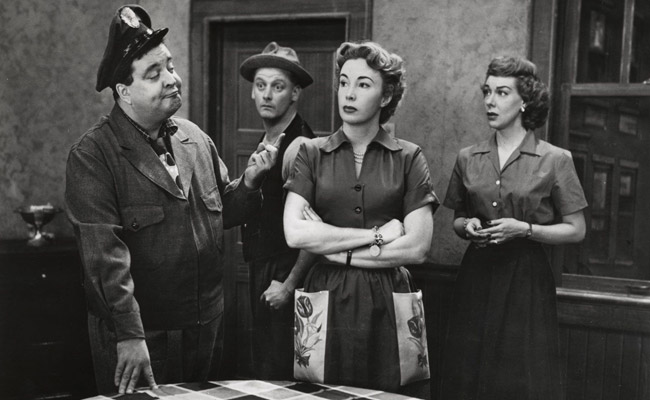
- October 1 – The Honeymooners (CBS, One season, 39 episodes)
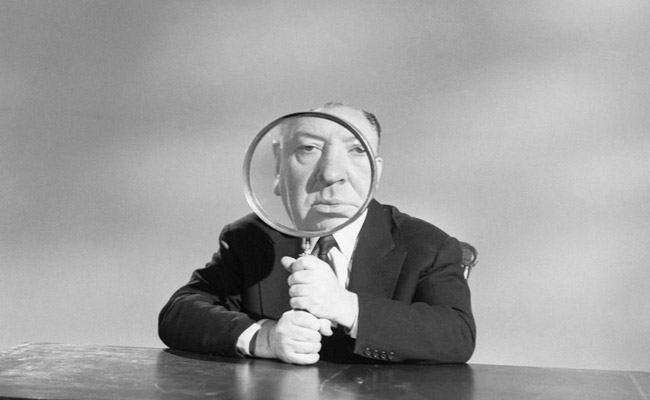
- October 2 – Alfred Hitchcock Presents (CBS/NBC, Ten seasons, 361 episodes)
- October 3 – Captain Kangaroo (CBS, Twenty-nine seasons, 6,090 episodes)
- October 3 – Highway Patrol (Syndication, Four seasons, 156 episodes)
- October 3 – Mickey Mouse Club ( ABC/Syndication/Disney Channel, Fourteen seasons, 620 episodes)
- October 4 – Playwrights ’56 (NBC, One season, 20 episodes)
Brave Eagle was produced by NBC and Roy Rogers Productions but was aired on CBS. Sergeant Preston of the Yukon, based on the radio drama Challenge of the Yukon, was broadcast in color which allowed the show to remain popular in Syndication long after its network run ended.
The Honeymooners was based on a recurring sketch on Jackie Gleason’s variety series, first on the DuMont network’s Cavalcade of Stars, which Gleason hosted, and then on The Jackie Gleason Show on CBS. While the show was the Number 2 show in the US at first, it eventually dropped to 19 and production ended after 39 episodes, now referred to as the ‘Classic 39’. Gleason would continue to revive the characters until 1978. It was one of the first American TV series to portray working class married couples in a gritty, non-idyllic manner. Each episode was self-contained and there was no continuity between episodes. On one episode the Kramdens have a TV or a telephone, in the next they don’t. In one episode the Kramdens get a dog, which Ralph grows to love and decides to keep it and some other dogs, but in the next episode they are gone and never mentioned again. Gleason’s three-year deal with CBS, worth $11 million at the time, required two seasons and 78 episodes of The Honeymooners with the option for a third season. The series was budgeted at $65,000 per episode for Season 1 and $70,000 for Season 2, with all production costs paid from that budget including Art Carney’s $3,500 per week salary, Audrey Meadows’ $2,000 per week, and Joyce Randolph’s $500 a week (she did not appear in every episode). Meadows was reportedly the only cast member to receive residuals from rebroadcasts of the show because her lawyer, who was also her brother, inserted language into her contract to that effect. Randolph received payment from the ‘lost’ Honeymooners episodes from the variety shows when they were released. The show was sponsored by Buick, but all references to the company were removed for Syndication. The show began to run out of steam early as it faced stiff competition from The Perry Como Show on NBC, the Number 1 program on television, and the writers felt confined by the 30-minute format whereas the sketches on the variety show could run longer. Gleason himself felt they were running out of ideas, and he and the network agreed to end the show after one season as Gleason did not want to cheapen the show just to keep it on the air. He eventually sold the films of the ‘Classic 39’ episodes to CBS for $1.5 million. The series was performed live and recorded onto film using Electronicam technology, which allowed for a live performance to be captured directly onto film resulting in a superior picture and sound quality than most shows would get with kinescopes (filmed recordings from a TV monitor of a live performance). Gleason did not like to fully rehearse because it would take away from the spontaneity, so the cast developed visual cues for the others if someone forgot a line or flubbed an action that was to be performed. The show’s theme song, ‘You’re My Greatest Love’, had lyrics but they were never sung. After the series ended, The Jackie Gleason Show returned the following week, and The Honeymooners were a part of the series, with eight episodes produced as full one-hour specials. 20 additional sketches of various lengths were also performed over the course of the season. Gleason revived his variety show in 1962, with The Honeymooners sketches included whenever Art Carney was available. Sue Ane Langdon and Patricia Wilson replaced Meadows and Randolph for two episodes. The Jackie Gleason Show returned again in 1966, and The Honeymooners were seen in color for the first time. As the new series was taped in Miami, Meadows and Randolph decided not to relocate so their roles were filled by Sheila MacRae and Jane Kean. Gleason was okay with the recast, but insisted Carney was the only actor to play Ed Norton. In 1967, the original Alice Kramden, Pert Kelton, made one of her last appearances before her death in 1968 as Alice’s mother. The show ended in a dispute with the network as Gleason wanted to continue the variety show with Honeymooners sketches interspersed while CBS wanted full one-hour Honeymooners episodes. Gleason, Carney, MacRae and Kean reunited for a sketch in a Gleason CBS special in 1973. Four one-hour specials aired on ABC between 1976 and 1978 with Meadows returning as Alice, while Kean remained as Trixie. These were the final Honeymooners productions. Over the course of the various broadcasts, Art Carney won five Emmy Awards for his portrayal of Ed Norton, and was nominated for another two. Meadows was nominated four times and won once, while Gleason received a single nomination in 1956.
Alfred Hitchcock Presents was a half-hour anthology series, but was expanded and renamed The Alfred Hitchcock Hour in 1962. While Hitchcock hosted the series in pre-filmed segments that were often unrelated to the episodes, he only directed 18 episodes total, and only one of those for the hour-long show. The show’s theme song was ‘Funeral March for a Marionette’ by Charles Gounod. The caricature of Hitchcock, drawn by Hitchcock, seen at the beginning of the show and the theme song have become indelibly associated with Hitchcock in pop culture. Two of his episodes were nominated for Emmy Awards including the famous ‘Lamb to the Slaughter’ episode. The Season 3 premiere directed by Robert Stevens won the Best Director Emmy. NBC refused to air one 1962 episode, ‘The Sorcerer’s Apprentice’, feeling that the ending was too gruesome. It was included in Syndication packages and is considered to be in the public domain. NBC revived the show in 1985 with a TV movie followed by a series, well after Hitchcock’s death, but included colorized original series openings and closing. It ran for one season on NBC, and an additional three on USA Network. Guest stars on the original series include Clint Eastwood, Robert Redford, Steve McQueen, Audrey Meadows, Bruce Dern, Robert Duvall, Walter Matthau, George Segal, Claude Rains, Joseph Cotten, Burt Reynolds, Vera Miles, Peter Lorre, Bette Davis, Dean Stockwell, Jessica Tandy, John Gavin, Charles Bronson, Michael Rennie, Roger Moore, John Cassavetes, Peter Falk, Leslie Nielsen, Ricardo Montalbán, Harry Dean Stanton and Barbara Bel Geddes.
Captain Kangaroo was the longest running nationally-broadcast childrens program of its day, and while its run has been surpassed by Sesame Street, Captain Kangaroo still holds the record for number of episodes broadcast.
Highway Patrol was the first American series broadcast in West Germany on the country’s commercial TV channel.
Mickey Mouse Club initially aired on ABC for four seasons. It was revived in Syndication for two seasons in 1977, and again on The Disney Channel from 1993 to 1996, and 2017-2018. Various titles include The All-New Mickey Mouse Club, MMC and Club Mickey Mouse. Mickey Mouse appears in every episode. Original cast members included Annette Funicello, Bobby Burgess, Cubby O’Brien, Dennis Day, Don Agrati (aka Don Grady), Paul Petersen, Paul Williams and Candice Bergen. The show included serials such as Spin and Marty, The Hardy Boys and The Adventures of Clint and Mac. ABC cancelled the series as the network and Disney could not come to financial terms for its renewal. ABC then refused to allow the show to be broadcast on any other network. Lisa Welchel was among the 1977-1979 cast. The 1989-1994 cast included Ryan Gosling, Justin Timberlake, JC Chasez, Britney Spears, Christina Aguilara, Keri Russell and Nikki DeLoach.
1965
- October – The New 3 Stooges (Syndication, One season, 40 live action segments, 156 animated episodes)
- October 2 – Atom Ant (NBC, Two seasons, 26 episodes)
- October 2 – The Hillbilly Bears (NBC, Two seasons, 26 episodes)
- October 2 – Precious Pupp (NBC, Two seasons, 26 episodes)
- October 2 – Secret Squirrel (NBC, Two seasons, 26 episodes)
- October 2 – Squiddly Diddly (NBC, Two seasons, 26 episodes)
- October 2 – Winsome Witch (NBC, Two seasons, 26 episodes)
Moe Howard, Larry Fine and Joe DeRita provided the voices of the animated Stooges for The New 3 Stooges. The 40 live-action sequences were used as wrap-arounds for the cartoons, but that confused viewers as the same segments would be re-used for different cartoons making audiences believe they were watching a rerun.
Atom Ant included The Hillbilly Bears and Precious Pupp. Secret Squirrel included Squiddly Diddly and Winsome Witch. In the Winter, the two shows were combined for one hour-long series, The Atom Ant/Secret Squirrel Show, but the second season was cut to 30 minutes. Jean Vander Pyl voiced both Maw Bear and daughter Floral on The Hillbilly Bears. Janet Waldo, best known as the voice of Judy Jetson, voiced Granny Sweet on Precious Pupp. Secret Squirrel first appeared on the primetime animated special The World of Secret Squirrel and Atom Ant on September 12, 1965. Mel Blanc provided the voice of Secret Squirrel. Vander Pyl was also the voice of Winsome Witch.
1975
- September 29 – Three for the Money (NBC, One season, 40 episodes)
Dick Enberg was the host of game show Three for the Money, at the same time he was hosting Sports Challenge after having just joined NBC. The UCLA Film and Television Archive holds both pilots, plus the November 13 and 21 episodes. Additionally, both the series premiere and the November 14 episode circulate among collectors.
1985
Henry Winkler-John Rich Productions
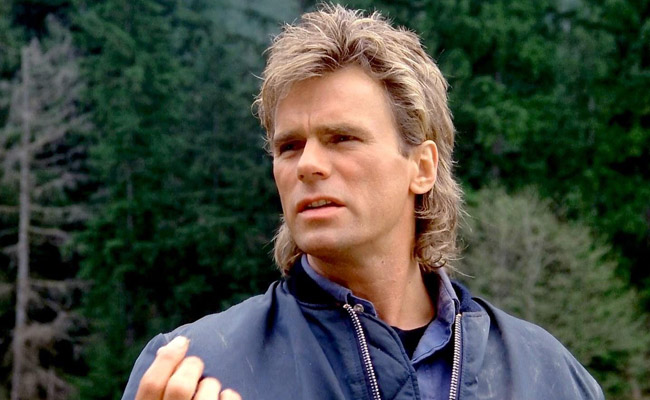
- September 29 – MacGyver (ABC, Seven seasons, 139 episodes, 2 TV movies)
- September 29 – Amazing Stories (NBC, Two seasons, 45 episodes)
- September 30 – M.A.S.K. (Syndication, Two seasons, 75 episodes)
- October 4 – Misfits of Science (NBC, One season, 16 episodes, 1 unaired)
While MacGyver officially ended on April 25, 1992, ABC aired a previously unaired episode on May 21, 1992. TV movies Lost Treasure of Atlantis and Trail to Doomsday aired in 1994. The series was rebooted by CBS in 2016. Production on the series moved from Los Angeles to Vancouver with Season 3 following a threat of cancellation due to high production costs. The show returned to Los Angeles for the final season. The series was co-produced by Henry Winkler, who got Richard Dean Anderson to audition for the title role after spotting him in an episode of The Love Boat.
Amazing Stories was produced by Steven Spielberg’s Amblin Entertainment. The series earned 12 Emmy nominations and won five, including one for John Lithgow for Guest Actor in a Drama Series for the episode ‘The Doll’. The 1987 film *batteries not included was intended to be an episode of the series, but Spielberg liked it so much he turned it into a feature film. Spielberg would not commit to the series unless NBC guaranteed two seasons, and his name could not be used for promotion after the premiere. It also had to air in the 8:00 PM time slot on Sunday night. Each 30-minute episode was budgeted at $1 million, at a time when 60-minute series episodes were coming in at $900,000. Spielberg also wanted a third of the directors to be newcomers, and through his reputation he also drew established directors like Clint Eastwood and Martin Scorsese to helm episodes. Peter Weir wanted to direct an episode, but complications with his film The Mosquito Coast prevented that from happening. Following lukewarm ratings for Season 1, Spielberg agreed with NBC to be less hands-on, allowing others to oversee the show. NBC execs also blamed the lackluster reviews to the decision to pair the family-friendly show with the more macabre Alfred Hitchcock Presents, when parents expected to use the shows as an electronic babysitter. Families instead turned the channel to ABC’s The Wonderful World of Disney. That led to the cancellation of Alfred Hitchcock Presents (before being picked up by USA Network), but it wasn’t enough to bring viewers back. Apple TV+ rebooted the series in 2020, but it ran for just five episodes.
M.A.S.K. was based on the Kenner action figures of the same name, and was the first show with Closed Captions to air in Syndication.
The ninth episode of Misfits of Science was the first paid writing gig for Tim Kring, who would go on to create Heroes in 2006. Kevin Peter Hall and Courteney Cox were among the regular cast.
1995
- September 28 – New York News (CBS, One season, 13 episodes, 5 unaired)
- October 1 – Misery Loves Company (FOX, One season, 8 episodes, 4 unaired)
- October 1 – Too Something (FOX, One season, 22 episodes, 13 unaired)
- October 1 – Inspiration, Please! (Odyssey Channel, last broadcast in 1998)
- October 2 – Flipper (Syndication/PAX, Four seasons, 87 episodes)
- October 2 – Family Challenge (Family Channel, Two seasons, 144 episodes)
- October 2 – Wild Animal Games (Family Channel, One season, 65 episodes)
The cast for New York News included Gregory Harrison, Melina Kanakaredes, Madeline Kahn and Mary Tyler Moore.
Too Something was renamed New York Daze after it returned from hiatus in May 1996. FOX had run a contest to rename the series before it was yanked off the air following the fifth episode. The winner of the contest, Jeri Dobson, introduced the first renamed episode.
Faith-based game show Inspiration, Please! aired on The Odyssey Channel, which is now Hallmark Channel.
Though set in Florida, Flipper (aka Flipper – The New Adventures) was filmed largely in Australia, but three episodes were filmed in Florida. The show won Daytime Emmy Awards in 1996 and 1997 for Outstanding Sound Mixing.
Family Challenge was co-created by comedian Dave Thomas, and was produced as a pilot for ABC. Ray Combs hosted the first season, with Gene Wood as the announcer. It was Wood’s final permanent game show role. Combs died by suicide in June 1996. Michael Berger took over as host, with Charlie Glaize filling the announcer role. The show was retitled The New Family Challenge for Season 2.
Ryan Seacrest hosted Wild Animal Games with a chimp named Eddie as his co-host.
2005
- September 29 – Night Stalker (ABC, One season, 10 episodes)
- October 1 – Flight 29 Down (Discovery Kids, Two seasons, 26 episodes, 1 TV movie)
- October 2 – Sunday Pants (Cartoon Network, One season, 7 episodes)
- October 4 – Close to Home (CBS, Two seasons, 44 episodes)
Night Stalker was a reboot of the classic 1970s horror series Kolchak: The Night Stalker, with Stuart Townsend as Carl Kolchak. Gabrielle Union and Cotter Smith co-starred. ABC owned the rights to the original TV movies but not the TV series, so the show was limited to including characters only in the two movies The Night Stalker and The Night Strangler.
Flight 29 Down was actually comprised of three seasons, but the four Season 3 episodes were combined into one TV movie.
2015
Paul Mogel Network Television
- September 29 – Grandfathered (FOX, One season, 22 episodes)
- September 29 – The Grinder (FOX, One season, 22 episodes)
- September 30 – Code Black (CBS, Three seasons, 47 episodes)
- October 1 – Benders (IFC, One season, 8 episodes)
- October 1 – Gigi Does It (IFC, One season, 8 episodes)
- October 2 – Dr. Ken (ABC, Two seasons, 44 episodes)
- October 3 – The Inspectors (CBS, Four seasons, 104 episodes)
- October 4 – 50/50 (Travel Channel, One season, 8 episodes)
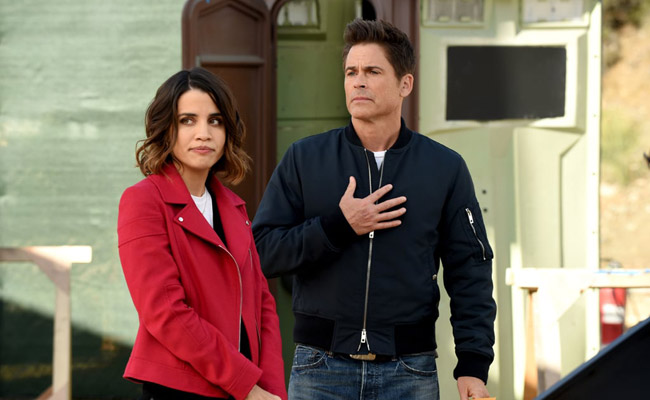
Rob Lowe earned a Golden Globe nomination for Best Actor in a Television Series – Musical or Comedy for The Grinder.
Code Black is based on a 2013 documentary by Ryan McGarry. David Krumholtz co-created and starred as the title character in Gigi Does It. Dr. Ken was co-created by and starred Ken Jeong, who based the series on his own experiences as a physician prior to becoming an actor.
The Inspectors was the only show on commercial television paid for by a U.S. government agency, with its funding coming from the United States Postal Service asset forfeiture and consumer fraud awareness funds. The program aired on Saturday morning. It was nominated for six Daytime Emmys for Season 1, winning one, and two Daytime Emmys for Season 4, also winning one.