
DiGa Vision
The Summer season begins to take shape with all but two decades producing at least one new show. 1955 had the biggest hit, a long-running musical variety series that moved from a major network to Syndication and became an even bigger hit, with reruns still being aired to this day. Another 1955 variety show introduced a man who would go on to host a late night talk show for 30 years. 1975 gave us a game show that had a short run but was revived under a different title which has become a cult favorite. 1985 had a series that never became a series until the network got desperate to fill a time slot, 2005 produced a hit reality series that only ran one season because one of the stars quit, and 2015 had two scripted series that ran for three summer seasons, one an adaptation of a hit horror movie franchise, the other based on a sci-fi novel by a popular author. Scroll down to see all the shows that premiered this week, and tell us if any of your favorite shows are celebrating milestone anniversaries.
1955
Teleklew Productions
- June 30 – The Johnny Carson Show (CBS, One season, 39 episodes)
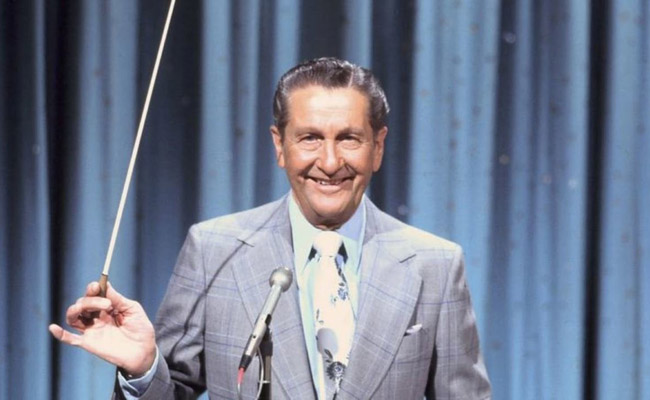
- July 2 – The Lawrence Welk Show (ABC/Syndication, 27 seasons, 1,177 episodes)
After Johnny Carson filled in for an injured Red Skelton on Skelton’s variety show, CBS created a new half-hour variety show for Carson. While short-lived, it provided a structure for what The Tonight Show on NBC would become under Carson’s tenure. After the show’s cancellation, CBS gave Carson a daytime series with the same title but it only ran through the Summer. Carson hosted the game show Who Do You Trust? from 1957 to 1962 until his hosting stint on The Tonight Show began in 1962. Ten Kinescope episodes were discovered by Carson’s second wife in a closet, handpicked by Carson as his favorite episodes. They were released on DVD by Shout! Factory in 2007 (one episode of the Summer series was also included). Additional episodes survive at the UCLA Film and Television Archive.
The Lawrence Welk Show actually began as a local program on KTLA in Los Angeles on May 11, 1951. The station then was part of the Paramount Television Network, which planned to distribute the show nationwide, but due to a feud between Paramount and the DuMont network, those plans fell through and both operations collapsed. The show was picked up by ABC for broadcast in 1955, under the title Dodge Dancing Party (1955-1956). From 1956 to 1959 the show was broadcast two nights a week, with the second episode titled Lawrence Welk Presents Top Tunes and New Talent (1956–58) and then Lawrence Welk’s Plymouth Show (1958–59). The Plymouth show was the first American television series to air with stereophonic sound. Televisions would not have the capability to play stereophonic sound for another 25 years, so ABC simulcast the show on its radio network, allowing viewers to tune in to watch their TVs and listen to the sound on their radios or stereo systems. The two shows merged to become The Lawrence Welk Show beginning with the 1959-1960 season, reverting to mono audio. Lou Crosby was the announcer for the Dodge shows and James Narz was the announcer for the Plymouth shows. Narz’s older brother Jack was employed by rival Ford, so James’ name was changed to Tom Kennedy to avoid confusion and he became the announcer for Date with the Angels before becoming a well-known game show host. Welk insisted on transitioning the show to color in 1965, and the show was broadcast from the Hollywood Palace, ABC’s only West Coast facility equipped for color production. The show returned to the ABC Television Center in 1966 after some studios were upgraded for color. The show returned to the Hollywood Palace for the 1976-1977 season, then moved to CBS Television City from 1977 to 1979, and back to ABC Television Center from 1979 until the show ended. ABC cancelled the show in 1971 during the ‘rural purge’ — which ended shows like The Beverly Hillbillies, Green Acres and Hee Haw on CBS — and the implementation of the Prime Time Access Rule which prohibited networks from airing programming in the 7:30 PM half hour slot on weekdays and Saturdays, and the 7:00 PM and 10:30 PM half hour slot on Sundays in the top 50 markets in the US (though the practice was carried out nationwide) with the time given back to the local stations. (After the repeal of the rule, networks did not reclaim the lost time — many stations carved out a full hour beginning at 7:00 PM — because they could buy the syndicators supplying programming during that hour and still make a profit, although they did reclaim the 7:00 and 10:30 time slot on Sundays.) After the cancellation, Welk started his own production company and continued to produce the show for Syndication, with some stations putting the show on in its old Saturday time slot, often drawing higher ratings than the network shows at the time. The show competed with the newly syndicated Hee Haw in many markets, and both succeeded. Welk retired in 1982 and production of the show ended. At 79 he was the oldest host of a US television program (surpassed by Bob Barker in 2003 and Betty White in 2012). Episodes from 1967-1982 were repackaged with new footage of Welk or the show’s performers for Syndcation under the title Memories with Lawrence Welk. The Lawrence Welk Christmas Reunion was produced in 1985, the last time Welk would appear with the Musical Family. Episodes from the ABC era exist as black-and-white Kinescopes as the show was broadcast live. It is assumed the recorded color episodes exist intact. No complete episodes have been released to the home video market, and there are no plans to do so although several of the Welk Musical Family specials have been made available during PBS pledge drives. The show has been referenced and parodied on several television programs, most famously on Saturday Night Live with Fred Armisen playing Welk introducing the Maharelle sisters (a parody of the Lennon Sisters), including Kristen Wiig’s Dooneese. The sketch was so popular it became a recurring sketch over the next few seasons. During the entire run of the Welk series, it only received one Emmy nomination in 1978 for Outstanding Achievement in Tape Sound Mixing.
1965
- No new series premiered this week in 1965.
1975
- June 30 – Showoffs (ABC, One season, 131 episodes)
Showoffs was a Mark Goodson-Bill Todman game show hosted by Bobby Van, with Gene Wood as the announcer. Two teams competed in a game of charades. One team wore red and the other blue, but as the colors were indistinguishable on black-and-white televisions, the words REDS and BLUES were also printed on them. The bell and buzzer sound effects used would later be used for Family Feud. The show also used the ‘Losing Horns’ from The Price is Right when a player lost the bonus round. Larry Blyden hosted a few different pilots for the show. Sadly, Blyden died in a car accident in Morocco shortly before the show was to begin taping, and Goodson-Todman needed a host on short notice, so they went with Van who had become a staple as a celebrity guest on Tattletales and Match Game. The show could not make a dent in the ratings against CBS soap The Young and the Restless and ended on December 26, 1975. The show was revived on CBS from 1984 to 1986 under the title Body Language, hosted by Tom Kennedy, with Johnny Olsen as announcer until his death in October 1985 (Bob Hilton took over for the duration of the show’s run). Another version of the show, a pilot titled Body Talk, was taped on October 11 and 12, 1990 with Vicki Lawrence as the host but it did not sell. It is believed the tapes Showoffs were wiped, with only one episode known to exist among tape traders in varied quality. The episode features Dr. Joyce Brothers, who injured herself on the episode which required partner Dick Gautier to do her portion of the charades for the final round. One of the Blyden pilots is held by the UCLA Film and Television Archive, and Wink Martindale’s YouTube channel uploaded one of the pilots on January 19, 2021. The episode broadcast on Christmas Day is also held by UCLA and was broadcast on BUZZR on September 25, 2021 as part of its Lost and Found marathon.
1985
Gillis-Wiseman Productions
- June 30 – Code of Vengeance (NBC, One season, 4 episodes, 1 pilot)
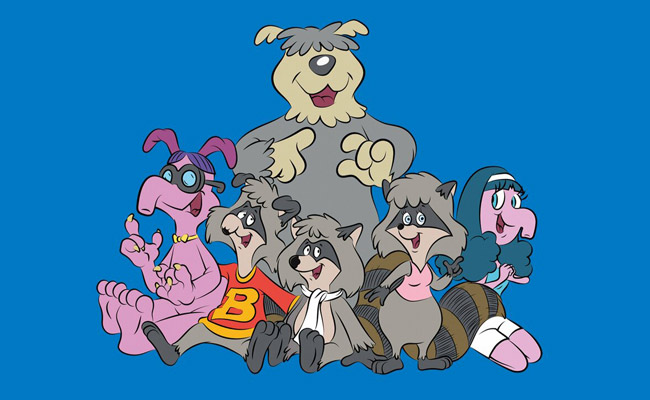
- July 4 – The Raccoons (The Disney Channel, Five seasons, 60 episodes)
Code of Vengeance starred Charles Taylor as David Dalton, a Vietnam vet drifting across the US in a camper van with his dog for company. The Dalton character was originally created for an episode of Knight Rider in 1984 as a backdoor pilot for a series titled All That Glitters. NBC felt the plot was too similar to CBS’ Cover Up and declined to pick it up. The character was originally written as a suave government agent but retooled as a drifter for the 1985 pilot which aired as the TV movie Code of Vengeance. The surprise success of the movie led NBC to order a series titled Dalton, but production was cancelled after four episodes were completed. Two episodes were edited together and eventually aired as the 1986 TV movies Dalton: Code of Vengeance II. The original four episodes were aired as Dalton’s Code of Vengeance, a fill-in series NBC needed on short notice as the revival of The New Alfred Hitchcock Presents was abruptly cancelled. One of the two previously unaired episodes was broadcast first, followed by the original two episodes that had been combined for the TV movie, and the second unaired episodes closed out the show’s run.
The Raccoons first aired in Canada on CBC beginning November 11, 1985, which had been preceded by three TV specials starting in 1980, and a direct-to-video release in 1984. Disney Channel co-produced the series with CBC.
1995
- No new series premiered this week in 1995.
2005
- June 29 – Stella (Comedy Central, One season, 10 episodes)
- June 30 – Being Bobby Brown (Bravo, One season, 11 episodes)
Stella was a sketch comedy series with Michael Ian Black, Michael Showalter and David Wain, former cast members of The State. ‘The Girls Downstairs’ were played by Andrea Rosen, Samantha Buck and Heidi Neurauter. Rashida Jones played one of The Girls in the pilot. Guest stars included Paul Rudd, Sam Rockwell, Topher Grace, Tim Blake Nelson, Alan Ruck, Janeane Garofalo, Elizabeth Banks and Edward Norton.
Being Bobby Brown showcased Brown’s home life with then-wife Whitney Houston. The series received its highest ratings ever for the Bravo network, but after Houston said she would not appear in a second season the show ended when Bravo and Brown could not reach an agreement to continue.
2015
Midnight Radio
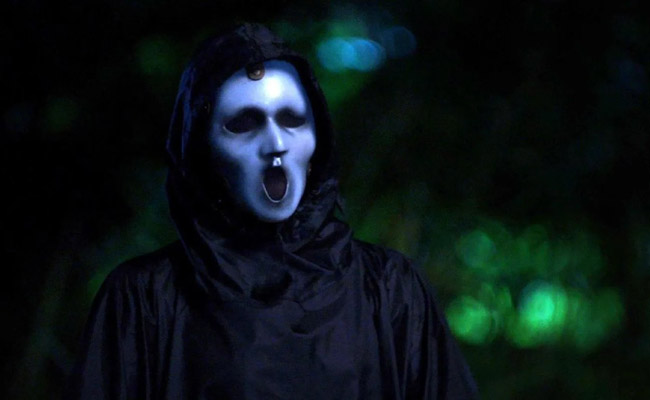
- June 30 – Scream (MTV, Three seasons, 30 episodes)
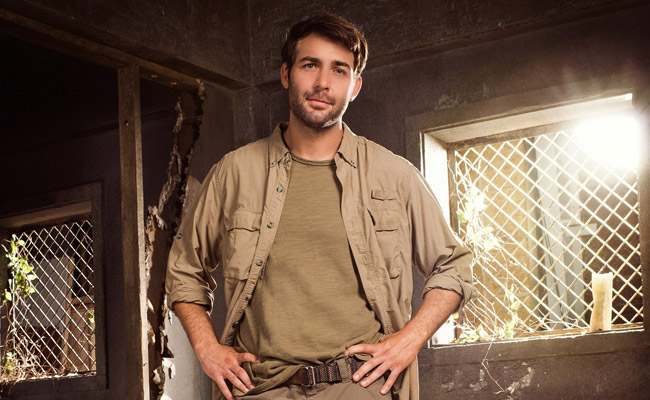
- June 30 – Zoo (CBS, Three seasons, 39 episodes)
After the first two seasons of Scream ended, MTV announced the third season would be a reboot with new characters and a new setting, and it was moved to VH1. The third season was also subtitled ‘Resurrection’. The show was originally criticized for not including the movies’ Ghostface killer, instead introducing a new masked killer. Ghostface was announced to appear in the third season, with original voice actor Roger L. Jackson also returning. Bella Thorne was offered the lead on the series but turned it down for a smaller role, which she felt would be more iconic because it would mark the first time she’d ever been killed on screen. The first two seasons filmed in Louisiana (New Orleans and Baton Rouge), with Season 3 filming in Atlanta.
Zoo was based on the novel of the same name by James Patterson and Michael Ledwidge. James Wolk was the first actor to be cast. Season 1 filmed in New Orleans, while Seasons 2 and 3 filmed in Vancouver.