Kennedy Miller Productions
Some interesting and notable films hit cinema screens this week across the decades beginning with the second feature film performance in 1925 from a comic actor who’s performance earned him a studio contract to star in his own feature-length comedies. 1935 saw the screen debut of a Broadway actor who would become a superstar in Hollywood. 1955 saw Bette Davis return to a royal role, while Alfred Hitchcock worked with one of his favorite actresses for the last time. 1965 produced a movie that would become a TV series, had a rare Russ Meyer flop that has become his signature film, and saw the final performance of an actress best known for a 1939 classic, while 1975 took Akira Kurosawa to Russia, and saw the debut of an actress who would go on to a huge music career and become beloved worldwide. 1985 had a big summer with films about vampires, Muppets and science experiments gone awry. One 1995 film gave voice to barnyard animals, while another took an early look at virtual reality. 2005 had an Oscar nominated indie film, and a Razzie nominated big-budget TV series adaptation. 2015 … took the week off. Scroll down to see all the movies that premiered this week, and tell us if any of your favorites are celebrating milestone anniversaries.
1925
- August – Justice of the Far North (USA, Columbia Pictures)
- August – King of the Castle (UK, Stoll Picture Productions)
- August – The Apache (UK, Millar-Thompson)
- August – The Last Witness (UK, Stoll Picture Productions)
- August – The Secret Kingdom (UK, Stoll Picture Productions)
- August – The Thoroughbred (USA, Phil Goldstone Productions)
- August – Trainer and Temptress (UK, Astra-National)
- August 1 – Kiss Me Again (USA, Warner Bros. Pictures)
- August 1 – Parisian Love (USA, B.P. Schulberg Productions)
- August 1 – The Unwritten Law (USA, Columbia Pictures)
- August 2 – Her Sister from Paris (USA, Joseph M. Schenck Productions)
- August 2 – Sally of the Sawdust (USA, D.W. Griffith Productions)
- August 2 – The Red Rider (USA, Universal Pictures)
- August 3 – Night Life of New York (USA, Famous Players-Lasky Corporation)
- August 4 – The Fighting Smile (USA, Independent Pictures)
King of the Castle, The Apache, The Last Witness, The Secret Kingdom, and Trainer and Temptress have no known US theatrical release dates.
Lost films: Kiss Me Again, Night Life of New York
Status unknown: King of the Castle, The Apache, The Last Witness, The Secret Kingdom, The Thoroughbred, Trainer and Temptress, The Red Rider, The Fighting Smile
A fragment of Justice of the Far North is preserved at the BFI National Film and Television Archive. The Secret Kingdom was reissued in 1929 as Beyond the Veil.
Warner Bros. records show Kiss Me Again as being ‘junked’ on December 27, 1948 due to the decomposition of the film negatives. The studio destroyed many of its pre-1933 films due to their deterioration. A copy of Parisian Love survives. Prints of The Unwritten Law survive at George Eastman House and The Library of Congress.
Her Sister from Paris production designer William Cameron Menzies won the first Oscar for Best Art Direction in 1929, and went on to work on a variety of films including Gone With the Wind, Spellbound, Things to Come, Invaders from Mars and Around the World in 80 Days. The film was the first for costume designer Adrian. A complete print of Her Sister from Paris is located at the Library of Congress.
Sally of the Sawdust, starring W.C. Fields, was based on the 1923 stage musical Poppy. Fields also starred in the 1936 film version that was titled Poppy.
1935
- August – Heart’s Desire (UK, British International Pictures)
- August – Lucky Days (UK, British & Dominions Film Corporation)
- August 1 – Danger Ahead (USA, Victory Pictures Corporation)
- August 1 – Rio Rattler (USA, Reliable Pictures Corporation)
- August 1 – Trails of the Wild (USA, Conn Pictures Corporation)
- August 2 – Every Night at Eight (USA, Walter Wanger Productions)
- August 2 – Old Man Rhythm (USA, RKO Radio Pictures)
- August 2 – Sundown Saunders (USA, Supreme Pictures)
- August 2 – The Farmer Takes a Wife (USA, Fox Film Corporation)
- August 2 – Woman Wanted (USA, Metro-Goldwyn-Mayer)
- August 3 – Danger Trails (USA, Beacon Productions)
- August 3 – Man on the Flying Trapeze (USA, Paramount Pictures)
- August 3 – The Irish in Us (USA, Warner Bros. Pictures)
- August 5 – Barnacle Bill (UK, Basil Humphrys Productions)
- August 5 – Cheers of the Crowd (USA, Monogram Pictures)
- August 5 – She Gets Her Man (USA, Universal Pictures)
- August 5 – The Ace of Spades (UK, Julius Hagen Productions)
- August 5 – The Phantom Light (UK, Gainsborough Pictures)
Heart’s Desire was released in the US on July 10, 1937. Lucky Days, Barnacle Bill, and The Ace of Spades have no known US theatrical release dates. The Phantom Light received a release in the US in 1950.
Lucky Days was produced as a quota quickie for distribution in the UK by Paramount British Pictures. Every Night at Eight introduced the song ‘I’m in the Mood for Love’, performed by Frances Langford. Henry Fonda makes his screen debut in The Farmer Takes a Wife, reprising his role from the 1934 Broadway show of the same name.
Man on the Flying Trapeze was known in the UK as The Memory Expert. It was the final film directed by Clyde Bruckman. The Phantom Light was produced as a quota quickie.
1945
- August 1 – Radio Stars on Parade (USA, RKO Radio Pictures)
- August 6 – Don Chicago (UK, British National Films)
- August 6 – I Didn’t Do It (UK, Columbia British Productions)
Don Chicago and I Didn’t Do It have no known US theatrical release dates. Due to a realistic murder scene, I Didn’t Do It received a British ‘A’ certificate, preventing anyone under the age of 16 from seeing the film without an accompanying adult.
1955
Paramount Pictures
- August – The Reluctant Bride (UK, Tempean Films)
- August – Stolen Assignment (UK, British Lion Films)
- August – The Naked Street (USA, Fame Pictures)
- August 1 – Footsteps in the Fog (Sweden, Frankovich Productions)
- August 2 – The Private War of Major Benson (USA, Universal International Pictures)
- August 3 – The Last Command (USA, Republica Pictures)
- August 3 – The Virgin Queen (USA, Twentieth Century Fox)
- August 4 – Escapade (UK, Angel Productions)
- August 5 – The King’s Thief (USA, Metro-Goldwyn-Mayer)
- August 5 – To Catch a Thief (USA, Paramount Pictures)
The Reluctant Bride was released in the US in June 1957 as Two Grooms for a Bride. Stolen Assignment has no known US theatrical release date. Footsteps in the Fog was released in the US on September 14, 1955. Escapade was released in the US on August 5, 1957.
Stolen Assignment was a sequel to 1954’s Final Appointment.
The Private War of Major Benson was shot on location at the campus of St. Catherine’s Military School, with cadets in all but the leading roles. The film’s premise was recycled for 1984’s Hard Knox and 1995’s Major Payne. The film received an Oscar nomination for Best Story.
The Last Command was based on the life of Jim Bowie and the Battle of the Alamo. The project began as a script at Republic Pictures in 1948 titled The Alamo, which was written by John Ford’s son Patrick for John Wayne. Wayne was announced in 1950 to be producer, director and star of the film following completion of The Quiet Man. Wayne clashed with studio head Herbert Yates over where the movie was going to be filmed, and Wayne was also unhappy that Yates wanted the film made for Republic and not Wayne’s production company for Republic to distribute, resulting in Wayne leaving the project. Five years later Wayne would star as Davy Crockett in United Artists’ unrelated The Alamo, which borrowed many elements from The Last Command. A reworked The Last Command was also known as The Unconquered Territory, The Texian, The Alamo and San Antonio Bexar. Frank Lloyd was the director, and it was his last film before retiring.
The Virgin Queen marks the second time Bette Davis played Elizabeth I of England, after 1939’s The Private Lives of Elizabeth and Essex. It was the first Hollywood film for Rod Taylor. Charles LeMaire and Mary Wills were nominated for an Oscar for Best Costume Design of a Color Production, but LeMaire won the award for Love is a Many-Splendored Thing.
The lead role in The King’s Thief was envisioned for Stewart Granger, then Robert Taylor was announced to star, but Granger was back by April 1953. The role was eventually played by Edmund Purdom, who MGM was building into a star at the time. Michael Wilding was cast as the villain, but was replaced with David Niven in a rare bad guy role. Hugo Fregonese began directing the film in December 1954, but was replaced with the semi-retired Robert Z. Leonard.
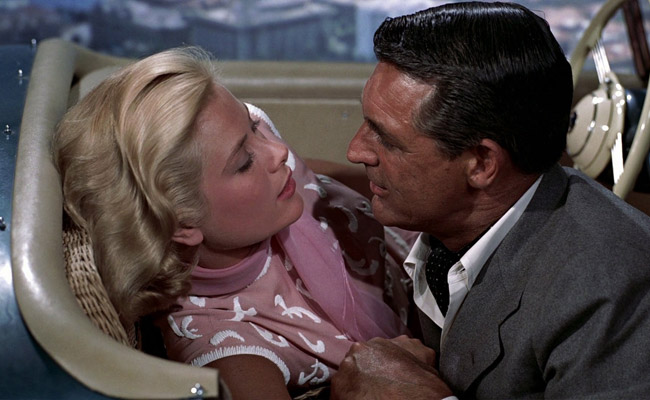
Alfred Hitchcock makes his signature cameo about ten minutes into To Catch a Thief sitting on a bus next to Cary Grant and a pair of caged birds. It was the first of five films Hitchcock made in the VistaVision process, and the last of three to star Grace Kelly. It was also the next to last film Hitchcock made with Grant. The costumes, including Kelly’s gold lamé gown, were designed by Edith Head, who received an Oscar nomination for her work. The film was also nominated for Best Art Direction, and won for Best Cinematography. It is the only one of six films Hitchcock made at Paramount that is still owned by the studio. The other five — Rear Window, The Trouble with Harry, The Man Who Knew Too Much, Vertigo, and Psycho — reverted to his personal ownership eight years after their theatrical releases and are now distributed by Universal Pictures.
1965
- August – Funny Things Happen Down Under (NZ, Pacific Films)
- August 1 – Arizona Raiders (USA, Admiral Pictures)
- August 2 – Son of a Gunfighter (Spain, Zurbano Films)
- August 3 – Darling (USA, Joseph Janni Productions)
- August 3 – You Must Be Joking! (London, Charles H. Schneer Productions)
- August 4 – Clarence, the Cross-Eyed Lion (USA, Ivan Tors Productions)
- August 4 – The Third Day (USA, Warner Bros. Pictures)
- August 5 – Love and Kisses (USA, Universal Pictures)
- August 6 – Faster, Pussycat! Kill! Kill! (USA, Eve Productions)
- August 6 – Ship of Fools (USA, Stanley Kramer Productions)
- August 6 – The Face of Fu Manchu (West Germany, Hallam Productions)
Funny Things Happen Down Under has no known US theatrical release date. Son of a Gunfighter was released in the US in May 1966. You Must Be Joking! entered wide release in the UK on August 20, 1965, and was released in the US in October 1965. The Face of Fu Manchu was released in the US on October 24, 1965.
Funny Things Happen Down Under was the first film for Olivia Newton-John. It was a spin-off of the Terrible Ten TV series.
Son of a Gunfighter was the last MGM film to be shot in CinemaScope. Star Russ Tamblyn was cast as ‘Son of a Gunfighter’ in Quentin Tarantino’s Django Unchained as an homage to the film.
Darling was originally titled Woman on Her Way, and Shirley MacLaine was cast as Diana but was replaced with Julie Christie. The film was nominated for five Academy Awards, including Best Picture, and won three: Best Actress, Original Screenplay and Costume Design (Black-and-White). It also received six BAFTA nominations, including Best British Film, winning four including Best British Actor (Dirk Bogarde), Best British Actress, Best British Screenplay and Best British Art Direction (Black-and-White). It received three Golden Globe nominations, winning for Best English-Language Foreign Film.
Director Michael Winner had stated that Columbia Pictures insisted actor Michael Callan play a lead role in You Must Be Joking! Winner said he was a ‘nice fellow who didn’t sell the film in America and didn’t help it in England either.’ Winner fired a cameraman who didn’t feel they could shoot in the chosen locations, and replaced him with Geoffrey Unsworth, who would go on to great acclaim for his work on 2001: A Space Odyssey, Cabaret and Superman.
Clarence, the Cross-Eyed Lion became the basis for the TV series Daktari. Clarence the Lion was cross-eyed in real life, and was so tame he’d purr when his back was rubbed. Betsy Drake agreed to appear in the film six years after retiring, and returned to retirement after completing the film. Marshall Thompson was bitten for real during the scene in which he rescues a woman from a leopard. The scene was left in the film. Thompson and Cheryl Miller reprised their roles on the TV series.
George Peppard knew The Third Day was going to be a bad movie, but he was deeply in debt at the time and needed the paycheck. Elizabeth Ashley, who was in a relationship with Peppard, said the movie was going to be ‘Technicolor garbage’, but took the role to work with Peppard and to appear in a film that would place her name above the title, making her a real leading lady. She also said the studio only cast her because she was sleeping with Peppard and wanted to use the publicity to sell the film.
Rick Nelson starred in Love and Kisses, which was written, directed and produced by his father, Ozzie Nelson. The film was based on the 1963 stage play of the same name. Rick’s then-wife Kristin was cast as his love interest.
The first draft script for Faster, Pussycat! Kill! Kill! was titled The Leather Girls. A second working title was The Mankillers, and the film was in production when the now iconic title was suggested by sound editor Richard S. Brummer. The film, which had a budget of $45,000, was shot in black-and-white to save money. Actress Susan Bernard had stated in interviews that she was truly scared of star Tura Satana, which some have suggested contributed to her performancs as a frightened kidnap victim. The three main antagonist characters in John Lee’s 2016 movie Pee-Wee’s Big Holiday were inspired by the film.
Ship of Fools features eleven main stars, and is the final film of Vivien Leigh. Director Stanley Kramer was unaware at the time of Leigh’s fragile mental and physical health, but praised her courage for taking a difficult role. Leigh was prone to outbursts on set which alienated some of the actors, but Simone Signoret and Lee Marvin were sympathetic and understanding. Screenwriter Abby Mann threw a party for the cast and crew upon completion of filming, but did not invite actress Gila Golen, whose performance Mann was reportedly unhappy with. The film received mixed reviews, but earned eight Academy Award nominations including Best Picture, winning for Black-and-White Cinematography and Art Direction. It also received two BAFTA nominations, and three Golden Globe nominations.
The Face of Fu Manchu was the first of five Fu Manchu films starring Christopher Lee and produced by Harry Alan Towers. Lee later stated the first one should have been the only one because it was the only good one of the five.
1975
- August – Framed (USA, Paramount Pictures)
- August – How Willingly You Sing (AUS, Inch)
- August – The Golden Cage (AUS, Independent Artists)
- August 1 – Zhong guo chao ren (Hong Kong, Shaw Brothers)
- August 2 – Dersu Uzala (Japan)
How Willingly You Sing and The Golden Cage have no known US theatrical release dates. Zhong guo chao ren was released in the US in 1975 as Infra-Man. Dersu Uzala was released in the US on December 20, 1977.
Framed was the final Hollywood film for director Phil Karlson. The Golden Cage was the first Australian film directed by a woman, Ayten Kuyululu, since the 1930s. Phillip Noyce, who would later direct Patriot Games and Clear and Present Danger, was the film’s assistant director.
Zhong guo chao ren (Infra-Man) was the first superhero film set in Hong Kong, the first film promoted in Hong Kong using a hot air balloon, and the first Shaw Brothers production to use storyboards. The character Princess Dragon Mom was the influence for Kinga Forrester in the 2017 revival of Mystery Science Theater 3000.
Dersu Uzala is Akira Kurosawa’s only film not in the Japanese language, and his only film shot in 70mm. It was filmed on location in Russia, a co-production between Japan and Russia. The film is one of four Russian films to win the Academy Award for Best Foreign Language Film, with War and Peace, Moscow Does Not Believe in Tears and Burnt by the Sun.
1985
Vistar Films
- August 1 – Don’t Call Me Girlie (AUS, documentary, Double L Films)
- August 2 – Fright Night (USA, Vistar Films)
- August 2 – Insignificance (USA, Recorded Picture Company-Zenith)
- August 2 – Sesame Street Presents: Follow That Bird (USA, Henson Associates-CTW)
- August 2 – Weird Science (USA, Hughes/Silver Productions)
Don’t Call Me Girlie was screened at the Chicago International Film Festival in October 1985 but has no known theatrical release date. The title is taken from a line of dialog in the 1938 film Dad and Dave Come to Town.
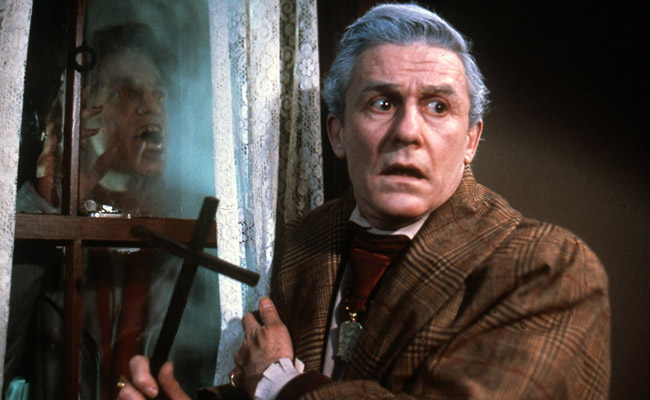
Fright Night was the directorial debut of Tom Holland. Holland wrote the film for himself to direct after the disappointment in the film made from his screenplay Scream for Help. Earning enough clout from successful screenplays Class of 1984, Psycho II and Cloak & Dagger, Columbia Pictures was willing to take a chance on him, unaware that the film would be as successful as it was. The Peter Vincent character was named after Peter Cushing and Vincent Price, and the part had been specifically written for Price. Price turned it down after being typecast and would not accept any horror movie roles. Columbia’s studio head suggested Roddy McDowall, and Holland had worked with the actor on Class of 1984 and was receptive to the suggestion. Holland and McDowall became so close that the actor invited him to a dinner party and introduced Holland to Vincent Price, who was flattered by the homage and felt McDowall did a wonderful job. Chris Sarandon had no interest in doing a horror movie but decided to read the script and was captivated by it. He was still uncertain about working with a first time director, so he flew to Los Angeles to meet with Holland and producer Herb Jaffe, and the two had an immediate rapport — and made several more films together. Sarandon was impressed with how Holland had the movie completely mapped out and accepted the role. Jonathan Stark was not a fan of vampire films but really liked the script. As the Billy Cole character was written as a hulking giant, Stark wore padding to his audition. He added a level of humor to his reading that Holland liked and was offered the role. Months passed before production began, and Stark feared he had lost the role, but the gap worked to his advantage, allowing him time to hit the gym and bulk up so he didn’t have to wear padding. William Ragsdale had auditioned for the role of Rocky Dennis in Mask, and the casting director recommended him for Fright Night. After several auditions, Ragsdale was notified he got the role on Halloween night 1984. Stephen Geoffreys had an awkward audition for the Anthony Michael Hall role in Weird Science, and the casting director recommended him for Fright Night. Geoffreys was thrilled to audition for the lead role of Charlie Brewster, and was heartbroken that he was wanted for the role of Evil Ed but it worked out. The role of Amy Peterson was the most difficult to cast, and there was no one perfect for the role until Amanda Bearse walked in. Holland allowed the actors to make suggestions for their characters which were incorporated into the script, and they were given a luxurious two weeks to rehearse, with the soundstage blocked out, performing the script as if it were a stage play. Holland encouraged the actors to write biographies for their characters, and with all the kinks ironed out during rehearsals, Holland only needed to shoot two or three takes of each scene. Sarandon tried to humanize Jerry Dandrige to show audiences that he was still a thinking human being who just longed for a normal existence. He also learned that most of the world’s bat population are frugivores, so Jerry is frequently munching on apples to, according to Sarandon, cleanse his palate after draining his victims’ blood. Sarandon and Stark were unaware of Holland’s intended gay subtext while filming. When Billy is cleaning Jerry’s hand, Holland told him to get down on his knees as Jerry pulls down the window shade. Stark only understood the moment after seeing the film. McDowall based his performance on the Cowardy Lion from The Wizard of Oz. The film was Columbia’s lowest-budgeted film of the year, with the studio focued on the presumed blockbuster Perfect, with John Travolta and Jamie Lee Curtis, so they never came to the Fright Night set assuming it was not going to perform, giving Holland complete freedom. There were a few glitches during filming, including Ragsdale breaking his ankle while running down a flight of stairs, which resulted in a slight schedule readjustment. Richard Edlund handled the film’s special effects, having just come off of Ghostbusters, which benefited Fright Night, knowing how to do the effects inexpensively and efficiently after working with a huge budget. The hard contact lenses were the worst part for the actors, who were only able to wear them for about 20 minutes at a time. Bearse had three pairs but one pair were excruciating, and the crew realized they had forgotten to buff out the lenses. Geoffreys wore a pair for 40 minutes which resulted in scratches to his eyeballs that lasted for months. Sarandon had to endure eight hours of makeup for his transformation scene, and to keep himself busy he pitched in to help apply the makeup since he’d had experience from his theatrical training. Once after spending all day in the makeup chair, a producer informed the actor that they were not going to be able to shoot his scene that day and Sarandon just said okay and took the makeup off. Evil Ed’s wolf transformation makeup took 18 hours to apply. The crew accidentally poured prosthetic adhesive into Geoffreys’ mouth instead of methylcellulose to simulate saliva, gluing his mouth shut. The making of the film was documented in the 2016 film You’re So Cool Brewster! The Story of Fright Night.
Sesame Street Presents: Follow That Bird was the first theatrical film from the Sesame Street TV series. The street set was rebuilt to make it look more realistic than it does on the series. While filming Bert and Ernie’s ‘upside down world’ song, Jim Henson and Frank Oz were actually in an upside down biplane eighteen feet from the ground. This was the last Muppet film to involve both Jim Henson and Richard Hunt before their deaths.
Model Kelly Emberg was originally cast as Lisa in Weird Science, but quit after two days due to creative differences. Kelly LeBrock was hired to replace her. Vernon Wells reprises his Wes character from Mad Max 2: The Road Warrior, but is renamed Lord General.
1995
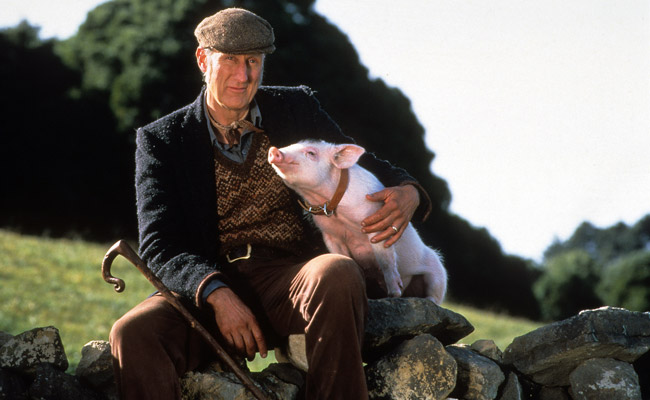
- August 4 – Babe (USA, Kennedy Miller Productions)
- August 4 – Bushwhacked (USA, Twentieth Century Fox)
- August 4 – Something to Talk About (USA, Hawn / Sylbert Movie Company)
- August 4 – Virtuosity (USA, Gary Lucchesi Productions)
The breed of pig selected to play Babe was a Large White, which grows rapidly. 46 piglets of the required size were used during the filming, as well as animatronic models for visual effects. The film is divided into six chapter to retain the storybook feel of the original novel, but the chapter titles are different from the book. The mice characters were added to read the chapter titles because younger audiences had trouble reading them at test screenings, needing help from the adults. James Cromwell nearly turned the film down because his character only had about 16 lines. His friend Charles Keating urged him to take it, saying it was a free trip to Australia, and if the movie stinks it’s the pig’s fault. Cromwell only received $50,000 for his work, and asked for more when the movie started making money but he was denied. Still, it changed his life in as much that he didn’t have to audition for work anymore. The film had a major impact on the growth of vegetarianism, and Cromwell himself became an ethical vegetarian after playing Farmer Hoggett, even organizing a ‘Compassionate Christmas’ vegetarian dinner event for Los Angeles homeless. Cromwell received a Supporting Actor Oscar nomination, one of seven nominations the film earned including Best Picture. It won for Visual Effects. It also received four BAFTA nominations, and it won its single Golden Globe nomination for Best Motion Picture – Musical or Comedy.
Bushwhacked was the last theatrical film directed by Greg Beeman before moving on to direct TV movies for the Disney Channel. It was also Brad Sullivan’s last film before retirement. The Farrelly brothers wrote the original script with the title Tenderfoot, but had their names removed after the script was changed. The title was changed after test screenings.
The film title Something to Talk About refers to the Bonnie Raitt song of the same name. Kyra Sedgwick received a Golden Globe nomination for Best Supporting Actress.
Denzel Washington is said to have restructured much of the story and dialog of Virtuosity during filming, having a romantic subtext between his and Kelly Lynch’s character removed completely.
2005
Village Roadshow Pictures
- August 5 – Junebug (USA, limited, Epoch Films Productions)
- August 5 – The Chumscrubber (USA, limited, El Camino Pictures)
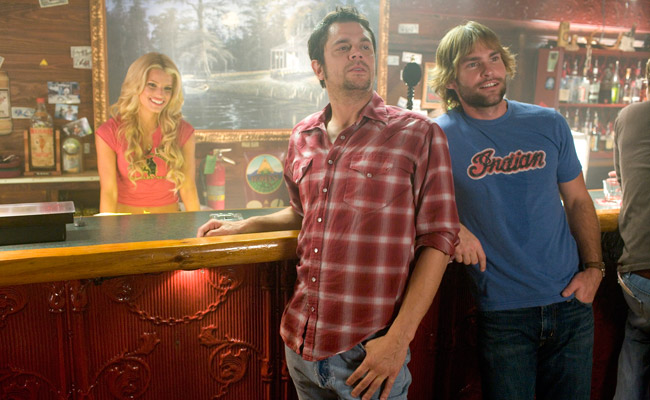
- August 5 – The Dukes of Hazzard (USA/Canada, Village Roadshow Pictures)
Junebug expanded to a wide US release on September 16, 2005. The Chumscrubber opened nationwide in the US on August 25, 2005.
Junebug was shot on Super 16mm film stock. Ben McKenzie makes his film debut. Amy Adams was Oscar-nominated for Best Supporting Actress.
Numerous actors were considered for the lead role of Dean in The Chumscrubber before Jamie Bell was cast, with the process taking over a year. Director Arie Posin wanted someone like Ralph Fiennes to play Michael, and was surprised when Fiennes expressed interest and agreed to be in the movie. Billy Wilder fan Justin Chatwin was drawn to the film after hearing that Posin had trained with Wilder.
All five members of the Broken Lizard comedy troupe appear in The Dukes of Hazzard, with Kevin Heffernan having a supporting role, while the other four — Steve Lemme, Jay Chandrasekhar, Erik Stolhanske, Paul Soter — appear in cameos. Chandrasekhar and Stolhanske reprise their roles from Super Troopers. Chandrasekhar also directed the film. The film earned seven Golden Raspberry Award nominations including Worst Picture, Director, Supporting Actor (Burt Reynolds), Supporting Actress (Jessica Simpson), Worst Screenplay, Worst Screen Combo (Simpson and her Daisy Dukes), and Worst Remake, Rip-off or Sequel.
2015
- No new films were released this week in 2015.